Kitchen Vastu Tips for a Healthy and Prosperous Home
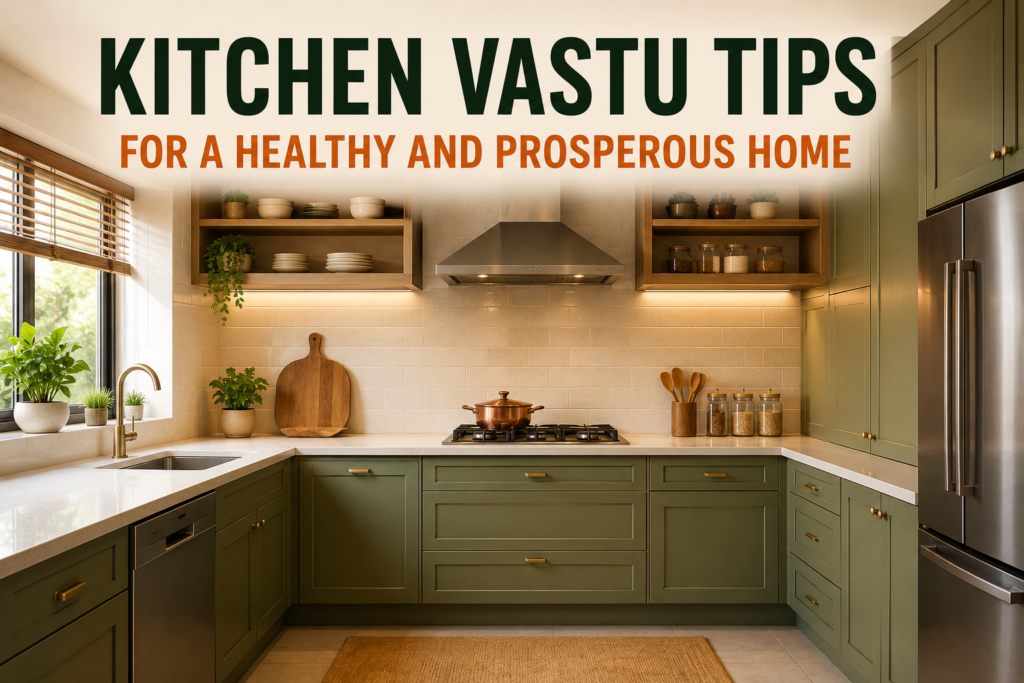
By Dr Aarushi Sadhotra

In most homes, the kitchen is treated as just another functional space—but in reality, it affects your health, daily energy, and even financial stability. If you think about it, the food prepared in the kitchen becomes the source of energy for the entire family. So, the environment where that food is made matters more than we usually realize.
Homes with poorly aligned kitchens are often linked to recurring issues such as health problems, stress, and financial instability. In contrast, making small corrections in kitchen placement or layout can contribute to a more balanced and positive environment. This is where Kitchen Vastu rules become relevant. Rather than blind belief, they focus on maintaining harmony between natural elements that affect everyday living.
Understanding Kitchen Vastu in Simple Terms
Kitchen Vastu is based on the principles of Vastu Shastra, which focuses on balancing the five natural elements – fire, water, air, earth, and space. Among these, the kitchen is strongly connected to the fire element. This is important because fire represents transformation, energy, and nourishment.
When the fire element is placed correctly, it supports good digestion, better health, and financial growth. But when it is disturbed – like being placed in the wrong direction or clashing with water – it can lead to imbalances. These imbalances can show up as frequent health issues, arguments in the house, or unexpected expenses.
The idea is not to overcomplicate things, but to align the kitchen in a way that supports a positive, balanced atmosphere.
Ideal Kitchen Direction and Its Effects
The direction of your kitchen is one of the most important aspects of Vastu. Ideally, the kitchen should be located in the south-east direction of the house. This zone is associated with the fire element, making it naturally suitable for cooking activities. When your kitchen is placed here, it can support greater stability, better health, and smoother financial flow.
If the south-east direction is not possible, the north-west direction can be considered as an alternative. While it may not be as powerful as the south-east, it still maintains a decent balance of energy.
However, certain directions should be avoided. A kitchen in the north-east can disturb mental peace and financial growth. Similarly, placing the kitchen in the south-west may lead to instability and health concerns. A kitchen in the center of the house is also not recommended, as it can disturb the overall energy balance of the home.
a) Stove Placement and Cooking Direction
The gas stove is the heart of the kitchen because it represents the fire element. Its placement needs careful attention. Ideally, the stove should be positioned in the south-east part of the kitchen, and the person cooking should face east. Cooking while facing east is believed to enhance positivity and support better‑quality food.
One of the most common mistakes I’ve seen is placing the stove right next to the sink. This creates a clash between fire and water elements, which can lead to stress and health issues. Another issue is placing the stove under a window, which can cause instability in the fire energy.
In situations where changing the position is not possible, even a small adjustment such as adding a partition or leaving a gap between the stove and sink can make a difference.
b) Sink Placement and Water Balance
Water is another important element in the kitchen, and it needs to be balanced with fire. The sink, which represents water, should ideally be placed in the north or north-east direction. This helps maintain harmony between elements.
When the sink and stove are placed too close to each other, it creates a direct conflict between fire and water. Over time, this imbalance can affect both health and relationships in the home. A simple solution, if relocation isn’t possible, is to introduce a separation—this could be a wooden divider or even a small green element like a plant or mat. These small changes can reduce the clash and restore balance.
c) Choosing the Right Colors for Kitchen Energy
Colors in the kitchen are often chosen based on aesthetics, but they also have a strong impact on mood and energy. Light and warm colors work best because they support the fire element while keeping the environment calm and positive.
Shades like light yellow, soft orange, beige, and light green are ideal choices. They create warmth without feeling overpowering. On the other hand, darker colors like black, deep grey, or dark blue can make the space feel heavy and may absorb positive energy. Even if you cannot repaint the whole kitchen, you can still introduce the right colors through cabinets, tiles, or accessories.
d) Storage, Cleanliness, and Energy Flow
A cluttered kitchen can create a sense of blocked energy. It may seem like a small issue, but it has a direct impact on how the space feels and functions. Keeping the kitchen organized helps maintain a smooth flow of energy.
Heavy storage items should ideally be placed in the south-west direction, while grains and daily-use items can be stored in the south or west. It’s also important to regularly clear out expired food and avoid keeping broken utensils. From a practical standpoint, a clean kitchen improves hygiene and supports a more positive, productive environment.
e) Placement of Appliances in Modern Kitchens
Electrical appliances like microwaves, mixers, and ovens should ideally be placed in the south-east direction, as they align with the fire element. Refrigerators, on the other hand, can be placed in the south-west or west direction. This placement helps maintain better balance within the kitchen. One thing to avoid is placing heavy appliances in the north-east, as this area should remain light and free-flowing.
f) Entrance, Lighting, and Ventilation
The entrance of the kitchen should ideally be in the east or north direction. This allows positive energy to enter the space. It’s also important to ensure that the kitchen is not directly aligned with a bathroom door, as this can affect hygiene and energy flow.
A well‑lit kitchen with proper airflow feels more energetic and supports better health. Natural light is always preferred, but if that’s not possible, ensure there is enough artificial lighting and proper ventilation through exhaust systems. A dark or poorly ventilated kitchen can feel heavy and affect both mood and productivity.
Vastu Remedies for Existing Kitchens
Not everyone has the option to redesign or shift their kitchen, especially in flats or rented homes. But that doesn’t mean you can’t improve the energy of your space. Vastu also focuses on simple, practical changes that are easy to follow without any major construction or changes.
You can start with small steps. For example, keep a small green plant in or near the kitchen to bring freshness and balance. Use light and warm colors through mats, curtains, or accessories if changing wall color isn’t possible. Placing a copper bowl filled with water in the north direction is another easy remedy that is commonly suggested.
You can also use Vastu pyramids or crystals to help correct energy imbalances. Along with these, try to keep your kitchen clean and clutter-free at all times. Avoid storing broken utensils or expired food items, as they can create negative energy. Make sure there is enough light and airflow in the space, even if it means using an exhaust fan or opening windows regularly.
These changes may seem small, but when followed regularly, they can create a more positive and comfortable kitchen environment over time. The main idea is to stay consistent and be mindful of how you use and maintain your kitchen every day.