Luxury vs Affordable Real Estate: Which Investment Wins in 2026?
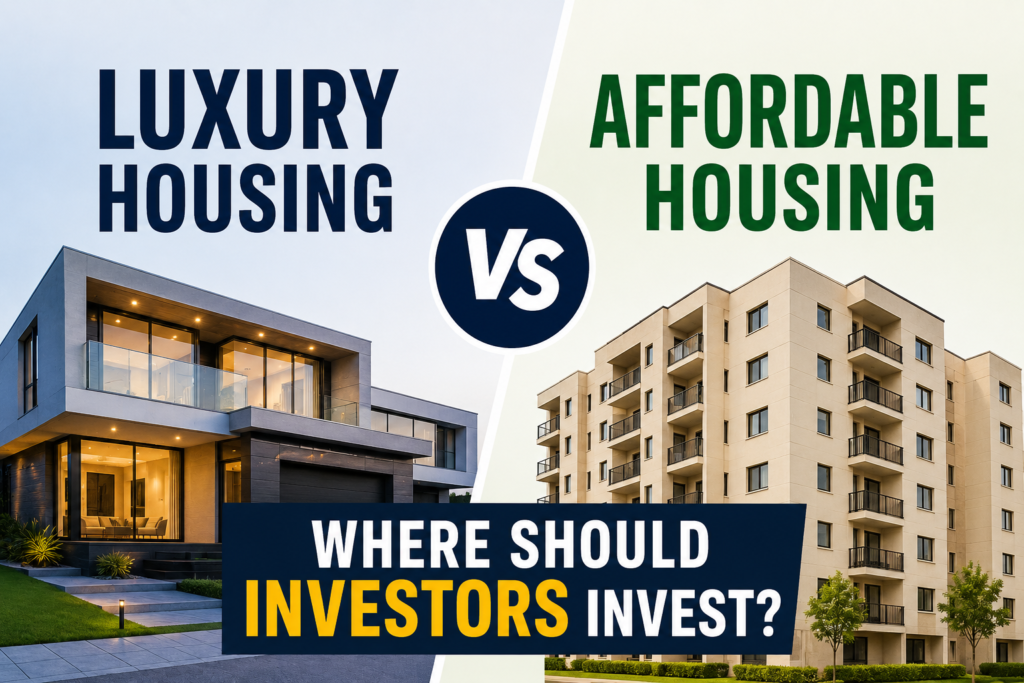
Real estate investment has always been a cornerstone of wealth creation, especially in emerging economies like India. As urbanization accelerates and income levels diversify, the housing market has naturally segmented into two dominant categories—luxury housing and affordable housing. For investors, the key question remains: where should you invest to maximize returns while minimizing risk?
The answer isn’t one-size-fits-all. It depends on your financial goals, risk appetite, market understanding, and investment horizon. This blog explores both segments in detail to help investors make informed decisions.
Understanding the Two Segments
Before comparing, it’s important to define what we mean by luxury and affordable housing.
Affordable housing typically targets middle- and lower-income groups. These homes are priced within government-defined limits and often come with incentives such as tax benefits and subsidies.
Luxury housing, on the other hand, caters to high-net-worth individuals (HNIs). These properties offer premium amenities, prime locations, exclusivity, and high-end finishes.

The Case for Affordable Housing
Affordable housing has emerged as one of the most stable and high-demand segments in recent years.
1. Consistent Demand
India faces a massive housing shortage in the affordable segment. Urban migration, population growth, and rising aspirations have created a continuous demand for budget-friendly homes. Unlike luxury properties, which depend on economic cycles, affordable housing demand remains relatively stable.
2. Government Support
The government has played a crucial role in boosting this segment through initiatives like PMAY (Pradhan Mantri Awas Yojana), tax benefits, and lower GST rates. These incentives reduce costs for both developers and buyers, making investments more attractive.
3. Faster Sales and Liquidity
Affordable homes typically sell faster than luxury properties due to their broader target audience. This means investors can exit more easily, ensuring better liquidity.
4. Lower Entry Barrier
One of the biggest advantages is affordability itself. Investors don’t need massive capital to enter this segment. Even first-time investors can participate and build a diversified portfolio.
5. Rental Demand
Affordable homes, especially in urban and semi-urban areas, attract steady rental demand from working professionals and families. This ensures consistent rental income.
Challenges in Affordable Housing
While the segment is attractive, it is not without drawbacks.
- Lower margins: Returns per unit may be lower compared to luxury properties.
- Location constraints: Many affordable projects are located in peripheral areas.
- Limited appreciation: Capital appreciation can be slower in some regions.

The Case for Luxury Housing
Luxury real estate has seen renewed interest, especially post-pandemic, as buyers seek better living spaces and premium lifestyles.
1. High Appreciation Potential
Luxury properties in prime locations often see significant capital appreciation over time. Areas like South Delhi, Mumbai’s Bandra, or Gurgaon’s Golf Course Road have historically delivered strong returns.
2. Premium Rental Income
Luxury homes can generate higher rental yields, especially when leased to expatriates or corporate tenants. Though occupancy may fluctuate, the rental value per unit is significantly higher.
3. Limited Supply, High Exclusivity
Luxury developments are fewer in number, which creates exclusivity. This scarcity often drives up property value, especially in prime urban locations.
4. Growing Demand Among HNIs
India’s growing affluent class and rising number of millionaires have boosted demand for high-end housing. Lifestyle upgrades, work-from-home trends, and global exposure have further accelerated this shift.
Challenges in Luxury Housing
Luxury real estate is not without its risks.
- Slower sales cycles: High ticket sizes mean fewer buyers.
- Market sensitivity: Luxury demand fluctuates with economic conditions.
- Higher investment risk: Large capital commitments increase exposure.
- Liquidity issues: Selling a luxury property can take time.
Key Comparison: Luxury vs Affordable Housing
1. Demand Stability
Affordable housing wins in terms of consistent demand. Luxury housing demand is cyclical and influenced by economic conditions.
2. Investment Size
Affordable housing requires lower capital, making it accessible to a wider range of investors. Luxury housing demands significant upfront investment.
3. Returns
Luxury properties offer higher potential returns per unit but come with higher risks. Affordable housing provides steady, moderate returns.
4. Liquidity
Affordable housing is more liquid due to its larger buyer base. Luxury properties may take longer to sell.
5. Risk Factor
Affordable housing is relatively low-risk, while luxury housing carries higher volatility.
Market Trends in India
The Indian real estate market has witnessed a shift in recent years.
- Post-pandemic demand surge: Both segments saw growth, but luxury housing experienced a sharper rebound due to lifestyle changes.
- Rise of Tier-II cities: Affordable housing is expanding rapidly in cities like Lucknow, Indore, and Jaipur.
- Luxury boom in metros: Cities like Mumbai, Delhi-NCR, and Bangalore are witnessing increased luxury launches.
- Digital transformation: Online property platforms and virtual tours have improved transparency and accessibility.
Who Should Invest in Affordable Housing?
Affordable housing is ideal for:
- First-time investors
- Risk-averse individuals
- Investors seeking steady rental income
- Those with limited capital
- Long-term wealth builders
If your goal is stable returns with lower risk, affordable housing is a strong choice.
Who Should Invest in Luxury Housing?
Luxury housing suits:
- High-net-worth investors
- Individuals with surplus capital
- Investors looking for high appreciation
- Those willing to take calculated risks
- Portfolio diversifiers
If you’re aiming for premium returns and can handle market fluctuations, luxury housing can be rewarding.
Hybrid Strategy: The Smart Investor’s Approach
Many seasoned investors are now adopting a hybrid strategy—investing in both segments.
This approach allows you to:
- Balance risk and returns
- Ensure steady income from affordable housing
- Gain capital appreciation from luxury properties
- Diversify your real estate portfolio
For example, an investor might own one luxury property in a prime location and multiple affordable units in growing suburbs.
Factors to Consider Before Investing
Regardless of the segment, investors should evaluate:
1. Location
Location remains the most critical factor. Infrastructure development, connectivity, and job hubs significantly influence property value.
2. Developer Credibility
Always invest in projects by reputed developers with a strong track record.
3. Market Timing
Understanding market cycles can help you enter and exit at the right time.
4. Rental Yield vs Appreciation
Decide whether your priority is rental income or capital appreciation.
5. Legal Compliance
Ensure the project is RERA-registered and legally compliant to avoid risks.
The Future Outlook
Both luxury and affordable housing segments are expected to grow, but their trajectories will differ.
- Affordable housing will continue to dominate due to strong demand and government support.
- Luxury housing will thrive in urban centers driven by wealth creation and lifestyle aspirations.
India’s real estate sector is evolving, and both segments will play crucial roles in shaping its future.
Final Verdict: Where Should You Invest?
If you’re looking for safety, liquidity, and consistent returns, affordable housing is the better choice.
If your focus is on high returns, exclusivity, and long-term appreciation, luxury housing may be worth the risk.
Ultimately, the best strategy depends on your financial goals. For most investors, a balanced portfolio combining both segments offers the optimal mix of stability and growth.