‘Mid-Segment Likely To Be Housing Mainstay In Mumbai Over Next Three Years’

Co-founder of Sarvam Properties Monty Joshi speaks to Realty & More on the evolving real estate scenario in Mumbai, including the impact of infrastructure development and the role of NRIs.
How do you view the current real estate scenario in Mumbai compared to other metros in India?
Mumbai currently leads Indian metros as the most expensive yet transaction-heavy property market. With average residential values at about INR 16,600 per sq ft, it also recorded the highest transaction volumes , as seen in stamp duty collections of over INR 6,700 crore in the first half of 2025. In Q3 2025, the city saw close to 15,000 new residential launches, led by the mid-segment. Despite a moderation in new supply, residential rentals in the Mumbai Metropolitan Region increased by 2–3 per cent year-on-year (YoY) in Q3 2025.
The office sector also remained strong in Q2 2025, with leasing crossing 4 million sq ft, vacancy levels reducing, and average rents edging higher across both prime districts and cost-effective corridors. Another distinguishing factor is that Mumbai retained a more balanced supply profile, with about a third of new launches in the affordable category, unlike NCR, Bengaluru, and Hyderabad, where supply leaned heavily towards luxury.
By contrast, Chennai recorded a sharper rise in sales, Bengaluru led the country in prime housing growth, and NCR was active on new launches. Within this varied picture, Mumbai’s combination of steady rentals, depth across income groups, premium pricing power, and sixth place globally for luxury price growth sets it apart among Indian metros.
Which segments (residential, commercial, luxury, affordable housing, etc.) do you see driving growth in Mumbai’s real estate market over the next 2–3 years?
Over the next 2–3 years, growth in Mumbai’s real estate market is expected to be anchored by mid-income housing, selective luxury projects, and steady commercial demand, with current trends offering clear signals of what lies ahead.
In housing, the mid-segment is likely to remain the mainstay. It already accounted for nearly two-thirds of new launches in Q3 2025, and infrastructure-led growth corridors such as the extended western suburbs, Navi Mumbai, and Thane are expected to support sustained demand. Within the city, the Eastern Suburbs, particularly Powai and Ghatkopar, are positioned to see continued absorption in the mid-income and high-end categories, supported by redevelopment and improved connectivity.
The luxury segment is also expected to hold buyer interest in established precincts such as South Mumbai, Worli, and Bandra, though the pace will be steadier than the sharp surge of the past two years. Lower Parel is likely to remain a focal point of premium demand, with traction in both residential and office markets. Affordable housing will also retain relevance, with about a third of launches in this category in Q3 2025. Redevelopment-led supply and aspirational upgrades are expected to sustain activity, and recent GST cuts are most likely to benefit this and the mid-segment, where buyers are more sensitive to costs.
On the commercial front, office demand is projected to stay consistent, driven by occupiers in flex, BFSI, and IT-BPM. Submarkets including Lower Parel, Powai, Andheri-Kurla, and Thane-Belapur are expected to be key centres of absorption, reflecting the diversity of Mumbai’s corporate base.
The rental market should also be buoyant in the near term, as families relocating during redevelopment projects rent homes across the city. As new supply is delivered over the medium term, rental values are likely to stabilise, though the segment will continue to be significant in scale.
What role are government policies, infrastructure projects, and interest rates playing in shaping buyer sentiment today?
A combination of government costs, infrastructure progress, and financing conditions influences buyer sentiment in Mumbai. High transaction charges and local levies continue to weigh on affordability and affect developer strategies. Recent policy measures, such as cuts in construction-related GST, are expected to ease cost pressures over time.
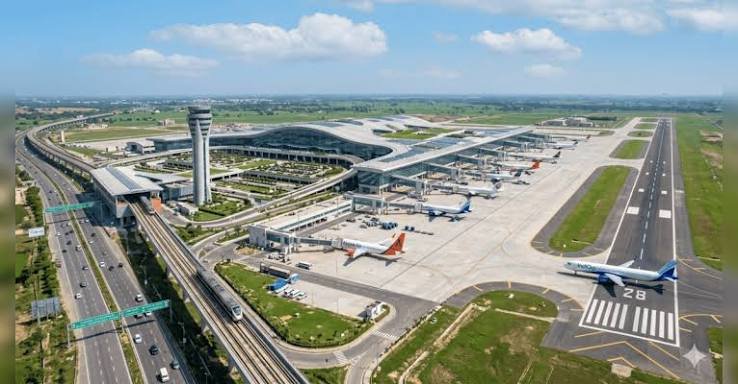
Infrastructure development is providing the strongest boost to buyer and investor confidence. The Mumbai Trans Harbour Link, Navi Mumbai International Airport, the coastal road, metro network expansion, and the sea links are transforming connectivity across the region. These projects are already encouraging demand in Navi Mumbai, Thane, Panvel, and the western suburbs, where new launches and absorption are closely tied to improved access. Transit-oriented development adds another layer, with Mumbai estimated to have nearly 20 million sq ft of TOD potential, the second highest among Indian cities. Key hubs such as Bandra, Dadar, CST, and the upcoming airport are set to anchor this growth, creating mixed-use ecosystems directly linked to mass transit.
Interest rates are another key factor. With home loan rates largely in the 7.3–7.7 per cent range, the impact is being felt more in the mid and affordable categories, where buyers are most sensitive to monthly EMIs. Simultaneously, income growth and sustained end-user demand are keeping sentiment broadly stable despite financing costs.
How is the demand from NRIs and investors impacting the Mumbai and Indian real estate landscape?
NRI and investor demand are driving premium housing and commercial activity across India, with Mumbai, Delhi-NCR, and Bengaluru emerging as the main centres. Premium and luxury housing in Mumbai is seeing strong participation from NRIs and HNIs. In the Mumbai Metropolitan Region, about 12 per cent of new launches are priced above INR 2.5 crore, and industry estimates suggest 20–25 per cent of this demand is NRI-driven. Overseas buyers are sustaining luxury absorption in locations such as South-Central Mumbai and Bandra, while also setting higher benchmarks for project quality. Developers are adapting with global-standard amenities such as smart home systems, wellness spaces, EV charging, and app-based community services, which international buyers increasingly view as essential.
Investor activity is also visible in commercial real estate. For India’s wealthy, commercial assets now account for a larger share of portfolios than residential, offering higher yields than homes. Mumbai’s Grade-A offices are attracting allocations from family offices and institutional investors, while warehousing, data centres, and student housing are gaining traction.
This combined demand strengthens pricing power in premium housing, broadens the scope of commercial segments, and raises the quality threshold for developers. With India’s HNI population expected to double by 2027 , and NRIs benefiting from the currency advantage of a weaker rupee, overseas demand is set to play a growing role in Mumbai’s premium housing.
Looking ahead, what are Sarvam Properties’ key focus areas or strategies to tap into emerging opportunities in the Indian real estate sector?
At Sarvam Properties, our strategy is centered on innovation tailored to the evolving needs of developers. We are in the process of launching a first-of-its-kind product designed specifically for the Mumbai real estate market. This solution addresses two critical areas for developers: efficient project sales management and short-term liquidity requirements.
By combining precision-driven sales facilitation with a structured approach to liquidity planning, our product is poised to offer unmatched operational support. As new opportunities continue to emerge in the sector, especially in high-demand urban markets, we believe this offering will act as a significant growth catalyst for developers. It is designed not only to enhance market responsiveness but also to give developers greater control, flexibility, and momentum in an increasingly competitive landscape.