New Metro Corridors Changing Property Prices in Delhi NCR
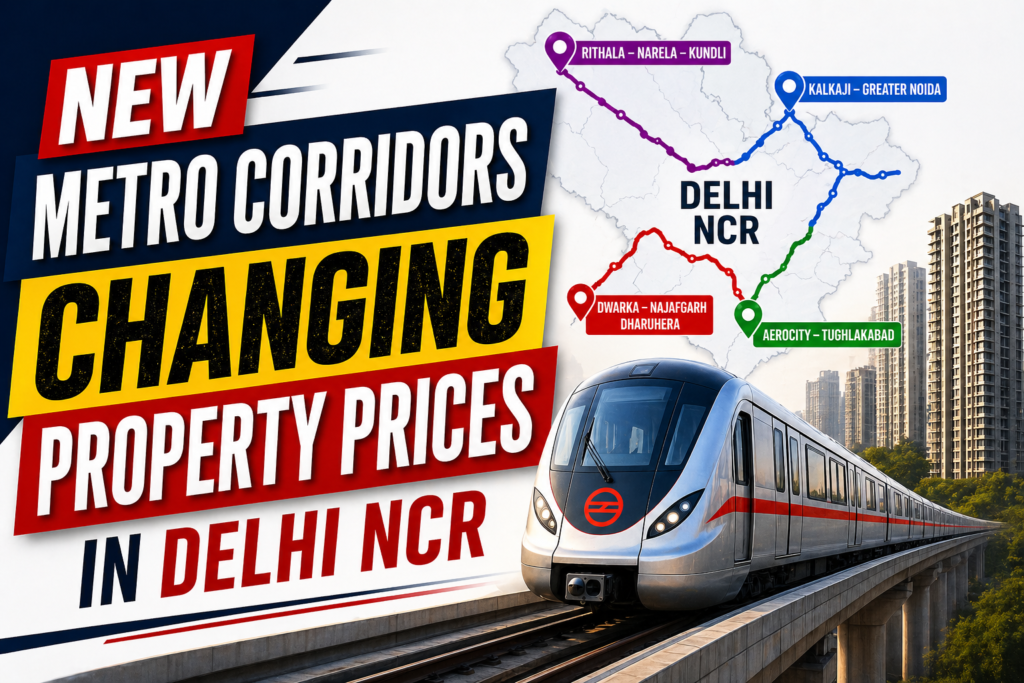
The real estate landscape of Delhi NCR is undergoing a significant transformation, largely driven by the rapid expansion of metro corridors. Over the past decade, metro connectivity has evolved from being a convenience to becoming one of the most critical determinants of property valuation. Today, with new metro corridors under development and several projects nearing completion, the impact on property prices is more pronounced than ever.
From Gurugram to Noida, Ghaziabad to Greater Noida, the ripple effects of metro expansion are reshaping both residential and commercial real estate markets. The emergence of new corridors is not only improving connectivity but also unlocking previously underdeveloped regions, turning them into high-potential investment hubs.
The Growing Metro Network in Delhi NCR
Delhi NCR boasts one of the most extensive metro networks in the world, and it continues to expand aggressively. Under Phase IV and upcoming expansions, multiple new corridors are being developed to enhance connectivity across the region.
Recent developments include:
- Completion of the Pink Line ring corridor, forming a 71.56 km network around Delhi
- Approval of new metro corridors worth over ₹12,000 crore to reduce congestion and pollution
- Expansion plans connecting regions like Kundli, Saket, and Indraprastha
- New regional corridors like the Delhi–Meerut RRTS operational in 2026
These developments are not just transportation upgrades—they are catalysts for real estate growth.
How Metro Corridors Influence Property Prices
1. Improved Connectivity Drives Demand
The most direct impact of metro expansion is improved connectivity. Areas once considered remote or inconvenient are now within easy commuting distance of business hubs.
This increased accessibility leads to:
- Higher buyer interest
- Increased residential demand
- Greater developer activity
Properties located near metro stations typically command a significant premium. Studies show that homes within 1 km of metro stations can be priced 10–30% higher than those located farther away .
2. Capital Appreciation in Emerging Corridors
New metro lines often pass through developing or underutilized regions. Once connectivity improves, these areas witness rapid capital appreciation.
For example:
- Property prices in metro-influenced zones can rise 15–25% due to infrastructure development
- In Gurugram, emerging sectors along new metro routes have seen 10–25% price growth even before project completion
This makes early investment in upcoming metro corridors highly lucrative.
3. Rental Demand and Yield Growth
Metro connectivity significantly boosts rental demand, especially among working professionals who prioritize commute convenience.
Key trends include:
- Higher occupancy rates near metro stations
- Increased rental yields
- Preference for studio apartments and co-living spaces
Investors often target metro-adjacent properties for steady rental income, making these areas hotspots for buy-to-let investments.
4. Commercial Real Estate Boom
Metro corridors don’t just benefit residential real estate—they also drive commercial growth.
Improved connectivity leads to:
- Expansion of office spaces
- Growth in retail hubs and malls
- Rise of co-working and mixed-use developments
Businesses prefer locations with easy employee access, making metro-connected zones highly desirable for commercial investments.
Key Metro Corridors Driving Real Estate Growth
1. Dwarka Expressway & Gurugram Corridors
Although primarily an expressway-driven region, metro expansion has amplified the growth of Gurugram’s real estate.
The Dwarka Expressway corridor has witnessed:
- Massive investor interest
- Rapid infrastructure development
- Price appreciation reaching as high as 50%+ annually in some cases
Upcoming metro connectivity is expected to further accelerate this growth.
2. Noida–Greater Noida Metro Expansion
The Noida and Greater Noida regions are benefiting from multiple new metro corridors.
Key impacted areas include:
- Sector 51
- Knowledge Park
- Greater Noida West
- Bodaki
These locations are emerging as investment hotspots due to improved connectivity and affordability .
3. Delhi–Meerut RRTS Corridor
The Delhi–Meerut Regional Rapid Transit System (RRTS), operational in 2026, is redefining intercity connectivity.
Impact on real estate includes:
- Boost in property demand in Ghaziabad and Meerut
- Rise in affordable housing projects
- Increased interest from long-term investors
This corridor is expected to create a new growth belt beyond traditional NCR zones.
4. New Delhi Phase IV & V Corridors
The ongoing expansion under Phase IV and upcoming Phase V projects will connect underserved areas and reduce travel time significantly.
These corridors will:
- Unlock new micro-markets
- Increase land value in peripheral zones
- Enhance connectivity to employment hubs
As a result, property prices in these regions are expected to rise steadily over the next few years.
Emerging Investment Hotspots
With metro expansion, several new micro-markets are gaining prominence:
Gurugram
- Sectors 95–115
- New Gurgaon
- Dwarka Expressway belt
Noida & Greater Noida
- Sector 150
- Greater Noida West
- Yamuna Expressway
Ghaziabad
- Vaishali
- Indirapuram
- Areas along RRTS
These regions are attracting both end-users and investors due to affordability and future growth potential.
The Price Ripple Effect
Metro corridors don’t just impact nearby properties—they create a ripple effect across surrounding areas.
Direct Impact
- Premium pricing near stations
- Faster sales cycles
Indirect Impact
- Development of supporting infrastructure
- Rise in land value in adjacent areas
- Growth of social amenities (schools, malls, hospitals)
Over time, entire regions transform into well-developed urban clusters.
Challenges to Consider
While metro expansion offers immense benefits, there are certain challenges:
Speculative Pricing
Prices may rise sharply even before project completion, leading to overvaluation.
Construction Delays
Delays in metro projects can temporarily impact investor sentiment.
Infrastructure Lag
In some areas, social infrastructure may take time to catch up with real estate growth.
Investors should conduct due diligence and focus on long-term potential rather than short-term gains.
Future Outlook
The future of Delhi NCR’s real estate market is closely tied to infrastructure development, especially metro expansion.
Key trends to watch:
- Integration of metro with RRTS and expressways
- Rise of transit-oriented developments (TODs)
- Growth of mixed-use projects near metro hubs
- Increasing demand for sustainable urban living
With continued government investment and urbanization, metro corridors will remain a key driver of property appreciation.
Conclusion
New metro corridors are fundamentally reshaping the real estate dynamics of Delhi NCR. By improving connectivity, boosting demand, and unlocking new regions, these projects are driving significant price appreciation across the region.
For homebuyers, metro connectivity offers convenience and lifestyle benefits. For investors, it presents an opportunity for high returns and stable rental income.
As Delhi NCR continues to expand, one thing is clear—real estate near metro corridors will remain one of the most lucrative investment avenues in the coming years.