How to Generate Passive Income Through Rental Properties: A Complete Guide (2026)
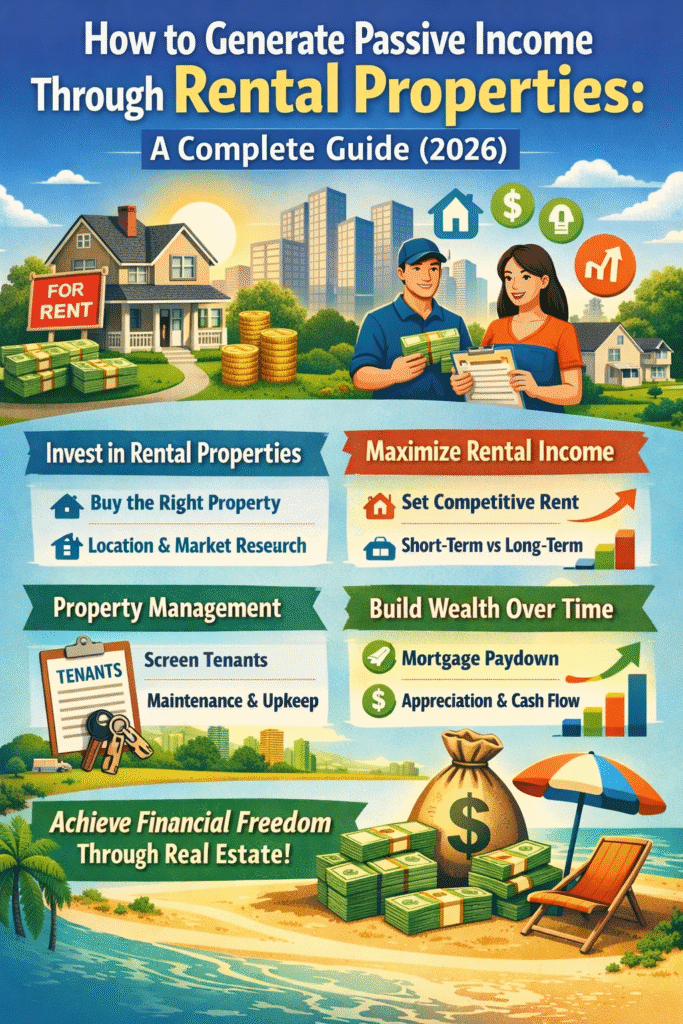
Everyone talks about passive income these days, and honestly, real estate is one of the few ways where it actually works in the long run. Out of all the options available, rental properties are probably the most practical way to earn a steady income without depending on a job.
But let’s be real—it’s not completely “passive” from day one.
You have to make the right decisions in the beginning. Once everything is set up properly, though, it becomes much easier to manage and starts feeling more like passive income.
In this guide, I’ll break things down in a simple way so you can understand how rental income actually works and how you can start.
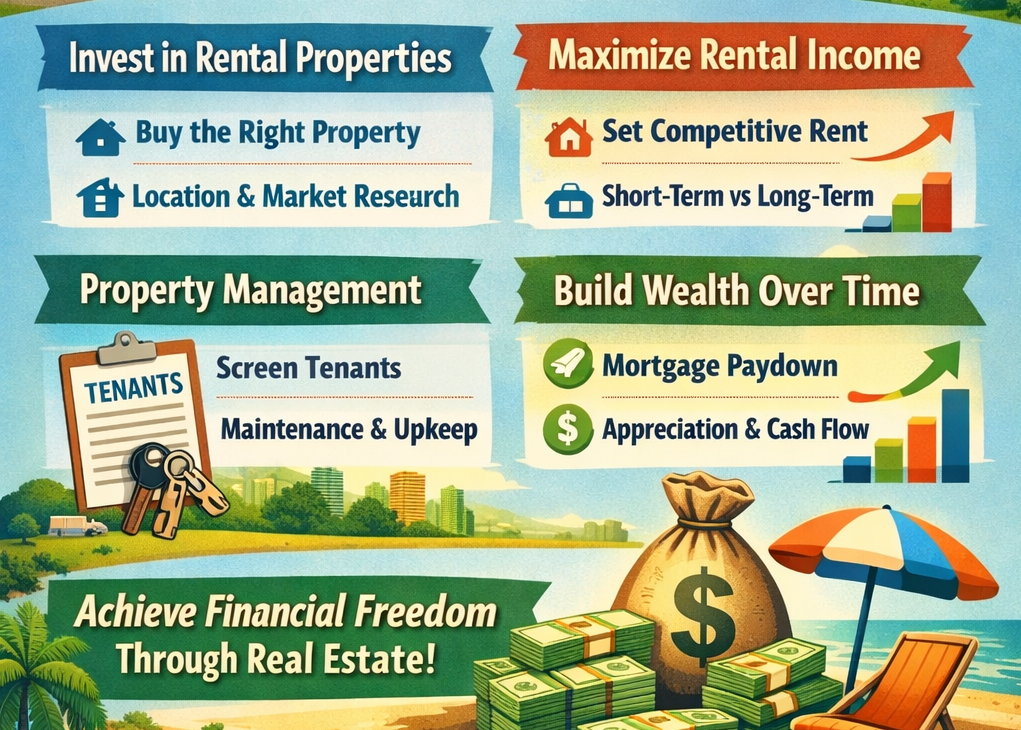
What Does Passive Income Mean in Real Estate?
In simple terms, passive income is money you earn regularly without working on it every day. In real estate, this usually means renting out a property and getting paid monthly by tenants. That said, it’s not 100% passive at the start. You’ll need to:
- > Buy the property
- > Set things up
- > Find tenants
After that, the effort reduces a lot, especially if things are managed properly.
Why Rental Properties Make Sense
There’s a reason why so many people prefer rental income.
Regular Income – You get monthly rent, which can help cover your expenses or even become a second income source.
Property Value Increases – Over time, property prices usually go up. So you’re earning rent and building wealth at the same time.
Tax Benefits – There are some tax advantages as well, especially if you’ve taken a home loan.
Helps Beat Inflation – As expenses go up, rents also increase. So your income doesn’t stay stuck.
Types of Rental Properties You Can Look At
Not all properties work the same way. It depends on what you want.
- Residential – Flats and houses are the easiest to rent out and usually have steady demand.
- Commercial – Shops and offices can give higher rent, but they also come with higher investment and sometimes longer vacancies.
- Short-Term Rentals – If the property is in a good location, short stays can generate more income.
- Shared Living – PGs and co-living spaces are growing, especially in cities with students and working professionals.
How to Actually Start
Let’s keep it simple.
Step 1: Be Clear About Your Goal
Do you want monthly income? Or are you more focused on long-term growth? Knowing this helps a lot.
Step 2: Focus on Location
This is probably the most important part.
Look for places with:
- Good connectivity
- Offices or colleges nearby
- Ongoing development
A good location makes renting much easier.
Step 3: Understand Your Budget
Before jumping in, check:
- How much you can invest
- Loan eligibility
- Monthly EMI
Make sure you’re not over-stretching financially.
Step 4: Pick a Practical Property
Don’t go for something fancy just for the sake of it.
Go for something:
- Easy to rent
- In a decent condition
- With basic amenities
Step 5: Plan Your Loan Smartly
Loans help you invest without paying the full amount upfront. But always keep a backup in case rent stops for a while.
Step 6: Choose the Right Tenant
This matters more than people think.
A good tenant = fewer problems
A bad tenant = constant stress
So take your time here.
Step 7: Set the Right Rent
If you keep it too high, no one will rent it. Too low, and you lose money.
Check nearby properties and set a realistic price.
Step 8: Manage It Properly
You can:
- Handle everything yourself
- Or hire someone to manage it
If you want it to feel more passive, outsourcing helps.
Making It More Passive
If your goal is to reduce effort, here’s what helps:
- Hire a property manager
- Use online rent payment methods
- Keep the property maintained
Small things like this make a big difference over time.
What Impacts Your Rental Income
A few key things decide how much you’ll earn:
- Location
- Type of property
- Demand in that area
- Amenities available
Even small upgrades can sometimes increase rent.
Mistakes to Avoid
A lot of beginners make these mistakes:
- Choosing a bad location
- Expecting unrealistically high rent
- Ignoring maintenance
- Not checking tenant background
Avoiding these alone can save you a lot of trouble.
How Much Can You Realistically Earn?
In India, rental returns are usually around 2–5% per year for residential properties.
Example:
Property Value: ₹50 lakh
Monthly Rent: ₹15,000
That’s around ₹1.8 lakh yearly.
Plus, your property value may also increase over time.
How to Increase Your Income
If you want better returns:
- Offer semi-furnished or furnished property
- Improve interiors slightly
- Target the right tenants
- Explore short-term rentals if possible
Long-Term Benefits
Rental income is not just about monthly cash.
It also gives you:
- Financial stability
- A growing asset
- Backup income
- Support in later years
Final Thoughts
Rental properties are not a shortcut to quick money. But if done properly, they can become a very reliable income source.
The key is to start smart, not rushed.
Conclusion
If you’re looking for a way to earn steady income and build long-term wealth, rental properties are definitely worth considering.
It takes effort in the beginning, but once things are in place, it becomes much easier to manage.
Over time, this can turn into a strong and stable passive income stream.