Guest Column
Retail Trends to Watch Out for in 2026
By Nandini Taneja

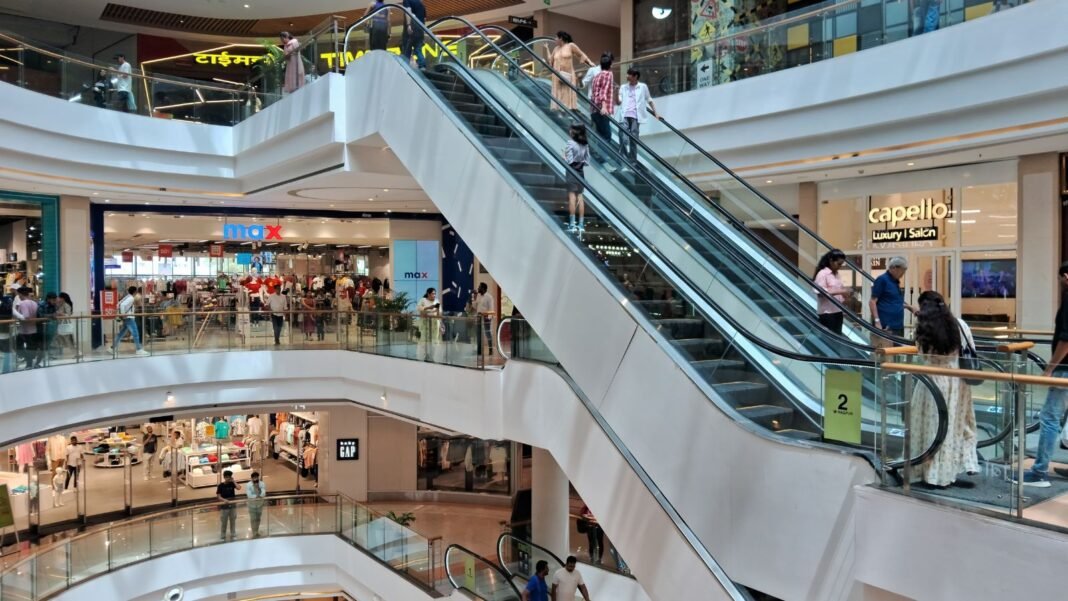
In 2026, the country’s most successful malls are unlikely to be viewed merely as retail projects; they will increasingly operate as urban community anchors woven into the daily rhythm of city life. The traditional identity of a mall as a weekend shopping destination is giving way to a “third-place” ecosystem: a space that seamlessly blends work, home and leisure. Developers are consciously designing open plazas, amphitheatres, co-working pods and quiet reading corners to extend dwell time beyond transactional visits. Experiential zoning is becoming more deliberate, with dedicated kids’ edutainment centres, pet-friendly areas and wellness studios coexisting alongside fashion and electronics.
Equally significant is the shift towards curated, year-long programming calendars, ensuring consistent engagement rather than episodic footfall spikes. This evolution is especially visible in mixed-use clusters emerging along high-growth corridors such as Dwarka Expressway and emerging tier 2 cities, where retail integrates with offices, residences and hospitality. In effect, retail real estate strategy is no longer centred on generating footfall alone; it is about retaining it through relevance, community and experience.
In 2026, events will no longer sit on the periphery of retail strategy; they will form its commercial core. Malls are increasingly hosting influencer-led meet-ups, exclusive brand drops and hyperlocal cultural programming, particularly in Tier 2 cities where aspirational consumers are seeking curated lifestyle experiences closer to home. The outcome is measurable: experience-led centres are reporting longer average dwell times and stronger weekend conversion rates, especially in F&B categories.
Besides, the next phase of India’s retail expansion is expected to be anchored in Tier 2 and Tier 3 cities, where aspirational consumption is converging with infrastructure-led growth. Rising disposable incomes, improved connectivity, and a visible upgrade in lifestyle expectations are creating fertile ground for organised retail formats beyond the metros. In many of these markets, the supply of Grade A retail remains limited, resulting in strong absorption potential and favourable leasing dynamics for early entrants.
According to the CBRE India Retail Figures H2 2025 report released in January 2026, India’s retail real estate market saw 8.9 million sq ft of absorption in 2025. While metros still lead in volume, the data highlights a ‘decisive shift’ toward quality-led growth, with mall developers and international brands increasingly looking at Tier-2 cities as their next big frontier.
Additionally, recent consumer data indicates that as Tier-1 markets face high land costs and limited space, nearly 45 per cent of the new supply pipeline for organised retail is now being directed toward high-growth Tier-2 and Tier-3 centres.
Cities such as Lucknow, Dehradun, Udaipur, and Chandigarh are witnessing first-generation premium mall developments that are introducing curated brand mixes, multiplex-led entertainment and expansive F&B zones to consumers who previously relied on fragmented high streets. Local and regional brands are also scaling into organised spaces, reinforcing the depth of demand. Cinema, dining and family-centric engagement zones are emerging as primary footfall drivers, signalling a structural shift in consumption patterns. For developers and investors, the opportunity is strategic: those who establish a presence early in these high-growth markets are likely to set rental and valuation benchmarks for the coming decade.
Further, F&B will move decisively from the margins to the centre of retail planning, redefining the economics of mall development. In several new-age projects, a significant gross leasable area is being allocated to F&B, reflecting a clear pivot towards experience-led consumption. The rise of microbreweries, chef-driven dining concepts and curated regional cuisine brands is complemented by rooftop restaurants, open-air food streets and formats that support the late-night economy, extending revenue cycles well beyond conventional trading hours.
Parallel to this shift is the growing integration of hospitality within retail ecosystems. Developments that combine organised retail with branded business hotels, including chains such as Lemon Tree Hotel, are evolving into self-contained micro-destinations. Weekday occupancy from corporate travellers sustains footfall, while banquets and conferences generate spillover demand for dining and entertainment. Strategically, the convergence of F&B and hospitality reduces volatility in retail revenue streams, underscoring a broader shift in which the anchor tenant of 2026 is less about fashion and increasingly about flavour and experience.
Moreover, sustainability in retail real estate is expected to transition from a certification-led checklist to a core consumer expectation and investment imperative. Green rooftops with solar installations, advanced water recycling systems and integrated EV charging infrastructure are increasingly being embedded at the design stage rather than retrofitted later. Developers are also aligning leasing strategies with ESG benchmarks, recognising that institutional capital and global brands now prioritise assets that demonstrate measurable environmental performance. In this context, sustainability is less about optics and more about risk mitigation, long-term asset resilience and reputational alignment across the retail value chain.
Taken together, these shifts signal that 2026 will not be defined by incremental retail expansion, but by structural recalibration. The competitive edge will lie not in scale alone, but in the ability to curate ecosystems that combine commerce, culture, hospitality and sustainability within a single address. As capital becomes more selective and consumers more experience-driven, retail assets that align spatial design with behavioural insight will command premium valuations. The emerging template is clear: in the year ahead, retail success will be measured less by how much space is built and more by how intelligently that space is activated.
The author is Chief Executive Officer (CEO) of Bhumika Enterprises





SKA Orion Inaugurates Shri Ram Temple with Grand Two-Day Community Festival
Noida, March 27, 2026: The residential community of SKA Orion in Sector 143B was transformed into a hub of spiritual...


L&T Construction’s B&F Vertical Secures Multiple Industrial Orders Across Gujarat and Andhra Pradesh
New Delhi, March 27, 2026: The Buildings & Factories (B&F) vertical of Larsen & Toubro (L&T) has announced the acquisition...


ICCPL Foundation Promotes Menstrual Health and Hygiene Across NCR Through Navratri Outreach
Noida, March 27, 2026: The ICCPL Foundation, the corporate social responsibility arm of the ICCPL Group, has concluded a comprehensive...

BPTP Recognised as ‘IGBC Green Crusader’ at IGBC Greentech Summit 2026
New Delhi, March 27, 2026: BPTP Limited was formally recognized as an “IGBC Green Crusader” by the Indian Green Building Council...


Beyond the Gurugram Model: Jewar Emerges as Integrated Economic Engine with 2026 Airport Launch
Greater Noida, March 27, 2026: As the Noida International Airport at Jewar prepares to begin operations on March 28, 2026,...


ArisInfra Approves Merger of ArisUnitern Subsidiary to Create Unified Construction Platform with 10x Scaling Target
Mumbai, March 27, 2026: ArisInfra Solutions Limited (ARIS), a tech-enabled service provider for the construction and real estate sectors, has...
-
 News4 weeks ago
Strategic Partnership between Brigade Group, Primus Senior Living to Develop Senior Living Communities
-
 News4 weeks ago
FY27 Outlook Residential Real Estate: High Base and Affordability Challenges; Tier I Mid-Premium Segment Resilient
-

 News2 weeks ago
FractoProp Receives SEBI Registration for Ridhama Real Estate Fund
-
News4 weeks ago
TARC Marks New Milestone at TARC Kailasa with Grand Tower Launch, New Experience Gallery Reveal
-
Guest Column4 weeks ago
Trust-Led, Lifestyle-Focused, Infrastructure-Driven: Punjab’s Real Estate Evolution
-
News4 weeks ago
Mumbai Real Estate Hits 14-Year High with Over 13,000 Property Registrations in February 2026
-
News1 week ago
Rise of Airport-Linked Real Estate: Opportunities Emerging Around Jewar
-
News4 weeks ago
35th Real Estate Agent Training Session Commences in Lucknow, Focus on Enhancing Professional Competence