Roads, Airports and Connectivity: The New Drivers of Punjab’s Real Estate Growth
By Tejpreet Singh Gill, Managing Director, Gillco Group

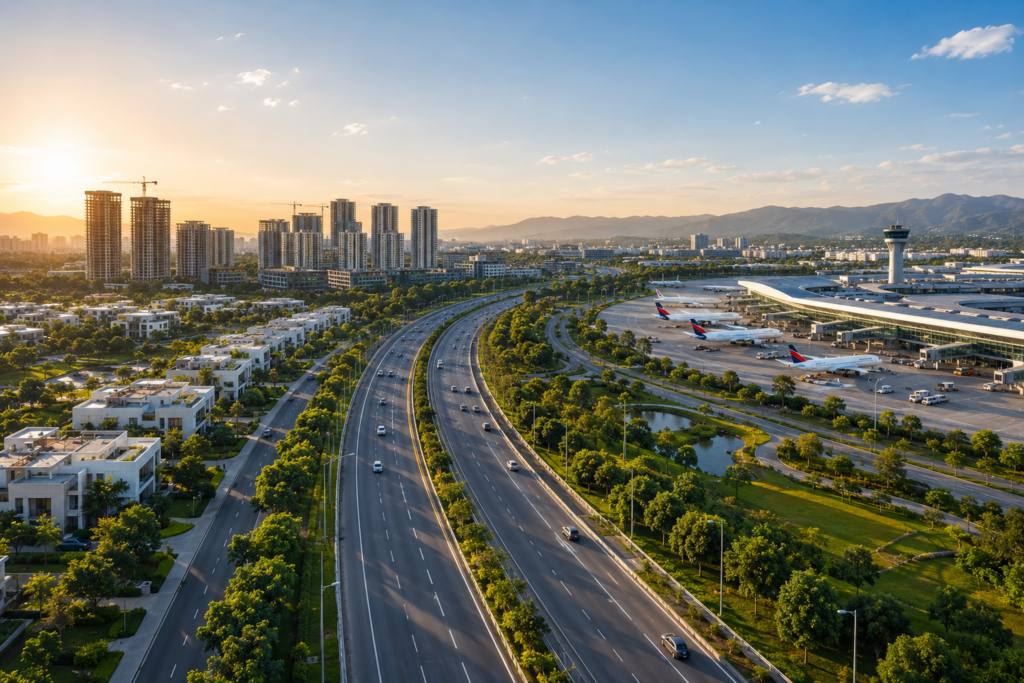
Real estate growth in Punjab is entering a phase where location is being redefined. Being close to a city centre is no longer enough. Increasingly, the real advantage lies in how quickly a place connects to an airport, a highway, a neighbouring city or a larger economic corridor.
This shift is already visible across the state. The opening of Halwara Airport has given Ludhiana a new air gateway, with direct connectivity to Delhi and onward international connections. At the same time, the Chandigarh Tricity region is seeing a fresh wave of road infrastructure, including the Zirakpur-Kurali highway, the proposed Chandigarh Airport-Aerocity corridor and the Zirakpur Bypass.
For real estate, the significance of such projects goes far beyond reduced travel time. Connectivity changes how people use a city. A location that once felt peripheral can become part of the daily movement network. That creates room for new housing, offices, retail, hospitality and mixed-use developments.
Mohali offers a good example. Multiple road projects are opening up links between Aerocity, IT City, Kharar, the airport and emerging residential districts. GMADA’s own development plans also recognise connectivity as central to the success of New Chandigarh and its surrounding urban expansion.
The next phase of growth, therefore, will not necessarily follow the old pattern of development spreading outward from established city centres. It is more likely to happen along infrastructure corridors. These corridors can create new urban clusters where employment, housing and commercial activity begin to develop together.
For developers, this changes the way land has to be evaluated. The question is no longer simply whether a parcel is located in a promising neighbourhood. We must also ask what connects it to the region, how that connectivity is evolving and whether the surrounding social and economic infrastructure can support sustained growth.
For homebuyers, the same principle is becoming increasingly important. A property with good access to schools, workplaces, airports and major roads can offer a more practical proposition than one that looks attractive on a map but remains isolated from everyday movement.
Punjab’s infrastructure story is gradually becoming a real estate story. As highways shorten distances and airports widen the state’s access to national and global markets, connectivity will increasingly determine where people live, businesses locate and new communities take shape.
The opportunity for Punjab is significant. The real challenge now is to ensure that infrastructure-led growth remains well planned, liveable and sustainable. The strongest real estate markets of the future will not simply be the ones with the most projects. They will be the places where connectivity and quality of life move forward together.
Disclaimer: Views expressed in this article are those of the author, and not necessarily of Realtynmore.com.