Smart Infrastructure and Grade A Design Emerge as Primary Drivers of India’s Office Leasing Surge

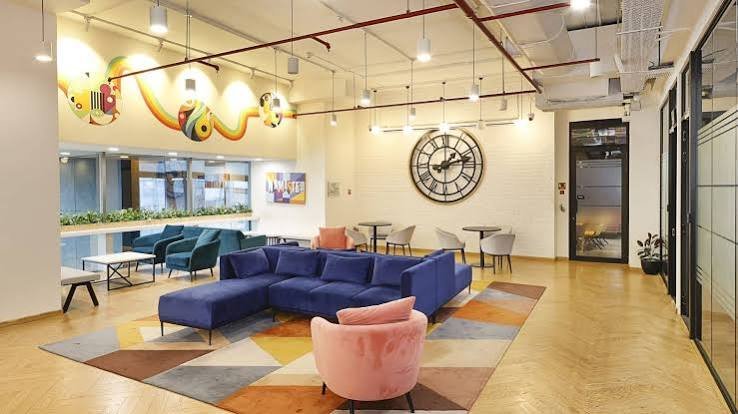
New Delhi, April 16, 2026: The Indian office leasing market is undergoing a fundamental transformation as traditional priorities like location give way to a new focus on “infrastructure depth” and digital readiness. Industry data and expert insights suggest that the next wave of growth in the commercial sector will be defined by smart infrastructure and Grade A designs rather than mere physical space.
Recent projections from Colliers indicate that demand for Grade A office space is expected to reach 70-75 million sq ft in 2026. Global Capability Centres (GCCs) are poised to drive this momentum, accounting for an estimated 40–50% of total absorption. As these GCCs evolve from cost centers into hubs for AI, analytics, and product development, the “office” is being redefined as a critical component of the operating environment rather than a simple container for employees.
The shift is reflected in the market’s performance metrics. According to CBRE, India recorded a record 82.6 million sq ft of office leasing in 2025—the third consecutive year of record activity. However, observers note that this demand is clustering around a select pool of high-quality assets. Buildings under ten years old with green certifications are negotiating leases from a position of strength, with premium assets showing resilient and, in some cases, rising rentals.

Sandeep Chhillar, Founder and Chairman of Landmark Group, highlighted this shift in occupier priorities.
“There is a visible recalibration in how occupiers evaluate office space today. It is no longer about headline location or rental arbitrage alone. Smart infrastructure and thoughtful Grade-A design are the new currency in office leasing. What seems to be weighing more heavily now is the ability of a building to support long-term operational continuity, whether through energy systems, digital infrastructure, or via compliance frameworks. This may not immediately reflect in every transaction, but over time, it will influence how portfolios will get reshaped.”
This trend is also altering how developers approach the construction lifecycle. While sustainability and smart systems were previously treated as “afterthoughts,” they are now being integrated during the initial planning stages. Data from Cushman & Wakefield supports this, showing that net absorption in Q3 2025 grew 35% year-on-year to 16.3 million sq ft, with rental growth led primarily by premium segments in cities like Mumbai and Hyderabad.

Sanchit Bhutani, Managing Director of Group 108, noted that this change is fundamentally altering tenant conversations and cost structures.
“There is also a subtle but important shift in how developers are approaching design and delivery. Earlier, sustainability or smart systems were often layered in, sometimes even as afterthoughts. Now, they are being embedded at the planning stage itself, which changes cost structures, timelines, and even tenant conversations. Not every occupier may articulate this clearly, but there is a growing preference for high quality and tech-enabled buildings that enhance employee experience, productivity and brand image, even if they come at a premium.”
The shift toward high-performance buildings is also impacting the legal and operational side of real estate. Experts suggest that as occupiers commit to longer lease tenures, they are demanding higher accountability regarding building uptime and sustainability benchmarks. This evolution is placing new pressure on asset managers to maintain service standards that go beyond the traditional role of a landlord.

Goldi Arora, Co-founder & Managing Director of Property Master, observed:
“What is perhaps less discussed is how this shift is also influencing lease tenures and engagement models. Occupiers are showing a willingness to commit longer, but with sharper expectations around performance, whether it is uptime, sustainability benchmarks, or even service standards within the building. This creates a slightly different kind of accountability for developers and asset managers, one that extends beyond just delivering space.”
While Bengaluru is expected to maintain its dominance by accounting for nearly a third of all leasing activity in 2026, followed by Hyderabad and the National Capital Region (NCR), a clear divergence is emerging within these hubs. Certain corridors are pulling ahead of others, driven not just by geography, but by the maturity of the local ecosystem and the intrinsic quality of the infrastructure provided.