The Future of Retail Real Estate in India: Trends That Will Define the Next Decade
By Mitul Jain, Managing Director, SPJ Group
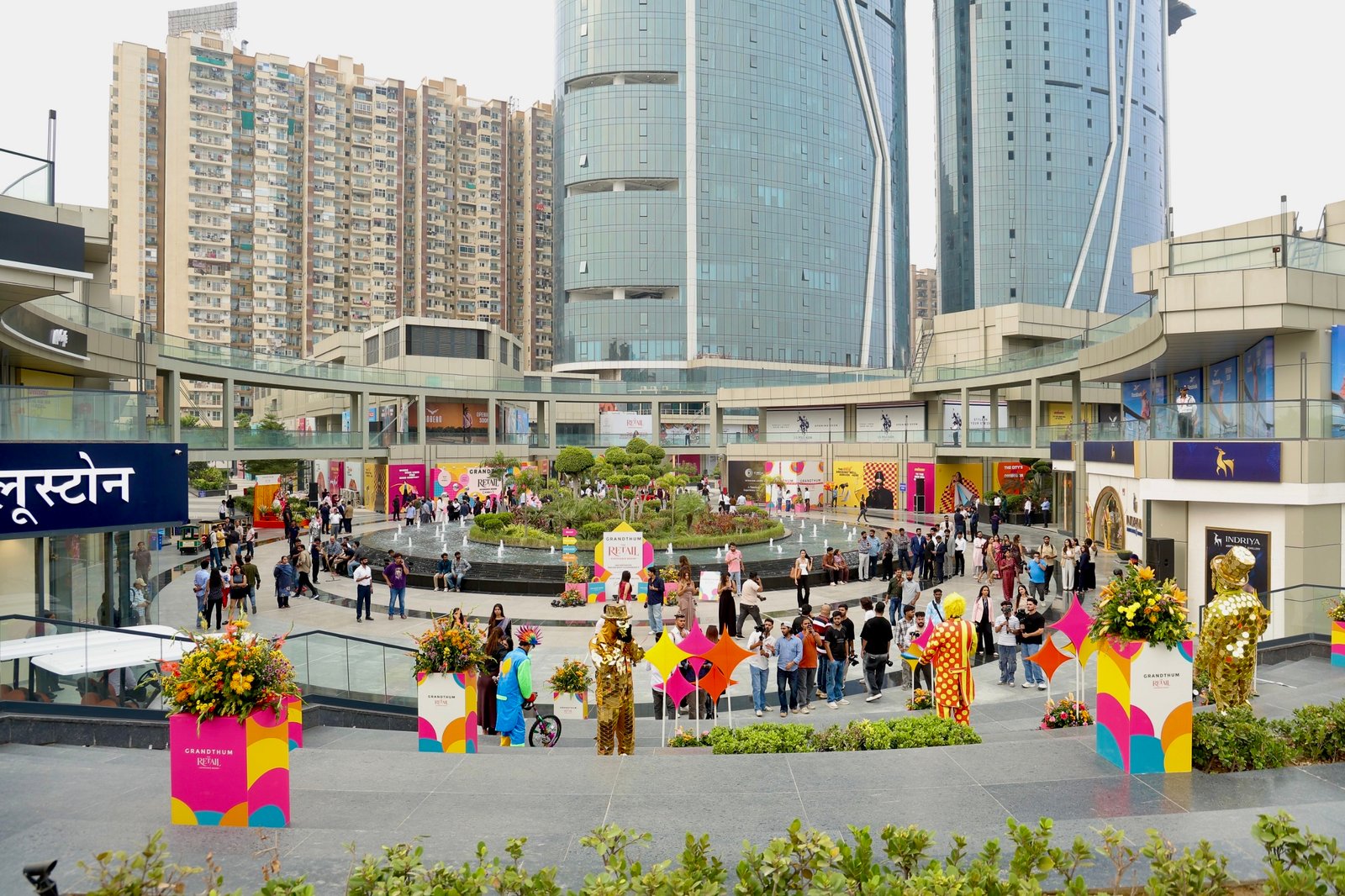
Retail developments have taken a new turn. What was once planned as a shopping destination now carries expectations of becoming a neighbourhood landmark, a social space, a dining hub, sometimes even an extension of the workplace. Consumers may still arrive to shop, but shopping is rarely the only reason. That subtle shift has begun shaping where projects are built, how they are designed and, increasingly, how they are valued.As a result, retail real estate is moving away from being an isolated commercial asset and becoming an integral part of a larger urban ecosystem. Projects that combine residential, office and retail components are no longer viewed as ambitious experiments. In many locations, they are simply responding to the way cities themselves are expanding.
That is also why experience has moved closer to the centre of retail planning. Product availability is no longer the differentiator it once was. Digital commerce has largely settled that question. Physical retail now competes on reasons to visit rather than reasons to purchase. Restaurants, entertainment, wellness spaces, public plazas and community events have become part of the commercial equation because they influence dwell time, repeat footfall and tenant performance. Leasing discussions increasingly extend beyond frontage and rentals to conversations around tenant mix, activation and the quality of the overall environment.
The numbers appear to support what has already become visible on the ground. JLL reported that high streets accounted for 48% of retail leasing activity during the first quarter of 2026, overtaking several conventional retail formats. The same research also projects nearly 46.1 million sq. ft. of new retail supply by 2030. While Delhi-NCR recorded retail leasing of around 0.7 million sq. ft. in the second quarter of 2026, as per Cushman & Wakefield.
Sustainability has followed a similar trajectory. It is increasingly difficult to separate environmental considerations from commercial ones. Energy-efficient buildings, better water management and resource-conscious operations are no longer viewed solely through the lens of regulatory compliance or corporate responsibility. Institutional investors, global retailers and consumers all evaluate assets differently today, and those assessments inevitably influence long-term occupancy as well as asset appreciation. The commercial case for sustainable development has become stronger because it is no longer presented as a sustainability argument.
Few markets illustrate these overlapping shifts as clearly as Gurugram. Each of its growth corridors appears to be responding to changing consumption patterns differently. Golf Course Road and Golf Course Extension Road continue to reinforce their position as premium retail destinations where curated experiences often matter as much as the brands themselves. Dwarka Expressway and New Gurugram are witnessing commercial development alongside expanding residential catchments, allowing retail to evolve as part of new urban communities rather than as a later addition. Southern Peripheral Road is beginning to occupy an interesting middle ground, supported by improving connectivity and a steadily growing office and residential base.
Old Gurugram presents perhaps the most interesting contrast. For years, its retail identity was shaped largely by fragmented local markets and established trading clusters. Infrastructure improvements and renewed private investment are gradually altering that perception without entirely replacing it. Organised retail is entering a market that already possesses an existing consumer base, something that many newly developing corridors spend years attempting to build.Perhaps the more interesting question is not where retail will grow next, but what kind of retail will remain relevant. Scale alone appears less persuasive than it once did. The projects attracting sustained interest are those capable of adapting to changing consumer behaviour without constantly reinventing themselves. Cities continue to expand, consumption continues to evolve and retail invariably follows, although not always in the direction conventional wisdom expects.
Disclaimer: Views expressed in this article are those of the author, and not necessarily of Realty&More.