Real-Time Execution Over Advice: How Unitern’s DaaS Platform is Building the Institutional Infrastructure for India’s Real Estate Future
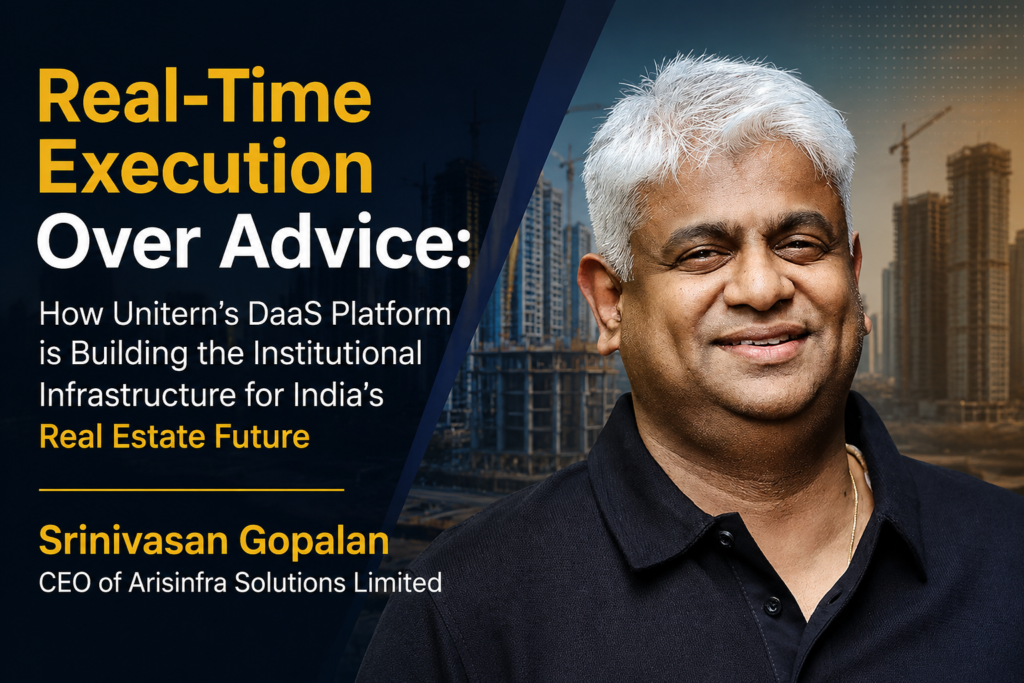
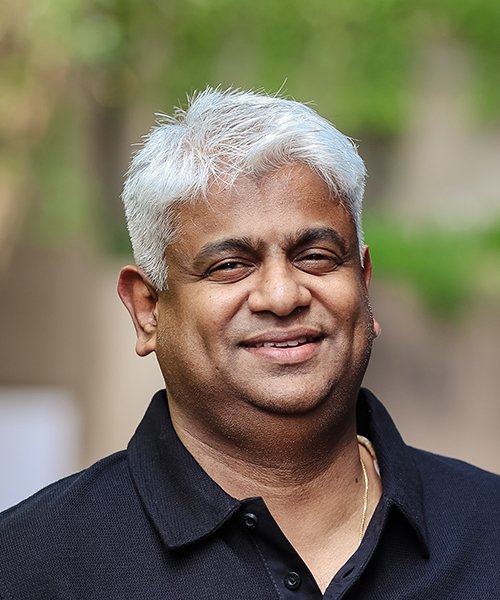
As India’s real estate sector becomes increasingly complex and regulated, developers are looking for smarter ways to manage projects, capital, and execution. In this interview, Srinivasan Gopalan, CEO of Arisinfra Solutions Limited, discusses how ArisUnitern RE Solutions’s Developer-as-a-Service (DaaS) platform is helping developers streamline operations, improve project visibility, and drive better outcomes through an integrated approach to Money, Material, and Management.
Q1. What inspired you to build India’s first Developer-as-a-Service platform, and what fundamental problem in real estate were you trying to solve?
Every mature industry — pharma, aviation, technology — eventually standardised its operating infrastructure. The same molecule, the same process, the same output — every single time. Real estate never did that. Walk into any mid-size developer’s office in India and you’ll find the same story: a project manager on one system, the finance team on another, the sales CRM disconnected from the construction schedule, and the promoter making decisions based on last month’s data — and gut instinct. Post-RERA, that era is over. The Indian real estate industry has always had the ambition. What it has lacked is the operating infrastructure. Unitern’ s DaaS platform is that infrastructure where the endeavor is to bring in predictability to the desired outcomes.
Q2. Most developers today work with disconnected systems and fragmented data. How does DaaS bring everything under one roof — and why hasn’t this been done before?
India has PropTech companies that build CRMs. Construction tech firms that sell BIM software. Finance platforms that underwrite development debt. Management consultants who review projects. What didn’t exist was a single platform that does all of this — simultaneously, in real time, with full accountability. Building that took years. It required proprietary technology, native integrations across enterprise systems, an embedded execution model, and a listed parent entity with the balance sheet and governance to back it up. That combination is genuinely hard to replicate — which is precisely why no one had done it before.
Q3. Your platform tracks over 90 parameters across 7 to 10 project health pillars in real time. In simple terms, what does that mean for a developer on the ground?
It means you always know where your project stands — and it also tells the developer which pillars / parameters will fetch him maximum results with minion efforts and it tell him which problems to attack given that the developer is always in dearth of time and all this, not at the end of the month when the MIS lands, but right now. Our Project Health Index, PHI, scores every project continuously across project parameters like collections, construction progress, sales velocity, compliance, financial health, vendor performance, and customer satisfaction. Each dimension carries a weighted score depending on each project complexity. As data flows in from the field, the platform recalibrates and surfaces red flags before they become crises. When a collections shortfall appears, the recovery plan is already being built. When a construction milestone slips, the escalation is automatic. For a developer, that’s the difference between managing a project and being ahead of it. There will be no surprises.
Q4. The DaaS model is built on three pillars — Money, Material, and Management. How do they work together, and which one makes the biggest difference for most developers?
The three pillars are designed to be inseparable. Money provides structured development capital with the governance and discipline of a listed enterprise. Material leverages Arisinfra’s technology-led procurement ecosystem, backed by over ₹1,000 crore in group turnover and a network of 2,000+ vendors. Management brings embedded C-suite execution with clear accountability for outcomes, not just advice.
Most developers who come to us struggle most with Management — not because they lack talent, but because running a project at institutional quality requires a level of process, technology, and bandwidth that most developers haven’t built internally. That’s where the platform changes everything.
DaaS also enables developers to remain Resource-light. Instead of creating large in-house teams across capital, procurement, and project delivery, they can plug into Unitern’s platform and access institutional-grade capabilities while staying focused on growth and development without losing control over the project.
Q5. Who is DaaS actually for — is this only for developers in trouble, or does it work for new projects too?
This is one of the most important things to clarify. DaaS is not a rescue product for stressed assets. It is a new operating standard — built for any developer who wants to move faster, safer, and smarter. Our engagement model is structured across three tiers. Genesis is for greenfield projects — a landowner or developer starting fresh who wants institutional infrastructure from day one. Ignite is for projects mid-flight — approvals done, construction underway, but needing the full DaaS engine to complete and monetise. Catalyst is for the last mile — projects near completion that need a final push on sales, collections, and liveability to close strong. So whether you’re breaking ground or approaching handover, DaaS is designed to meet you where you are. It is an operating system not for developers in trouble, but for developers to be out of trouble…
Q6. You say Unitern doesn’t advise — it executes. What does that actually look like for a developer who partners with you, and what changes for them from day one?
When a developer onboards with Unitern, they don’t receive a deck and a monthly review meeting. They receive a dedicated multi-disciplinary team that operates like an embedded C-suite — carrying targets, owning deliverables, being measured against the same KPIs the developer would use for their own people. That team brings together sales, marketing, finance, legal, construction, and operations under one accountability structure. The difference sounds subtle — advising versus executing — but it is the single most important distinction in our model. We don’t observe problems. We own Outcomes.