Where Retail Meets Hospitality: Aligning Asset Strategy to Create Experiential Modern Malls
By Nandini Taneja
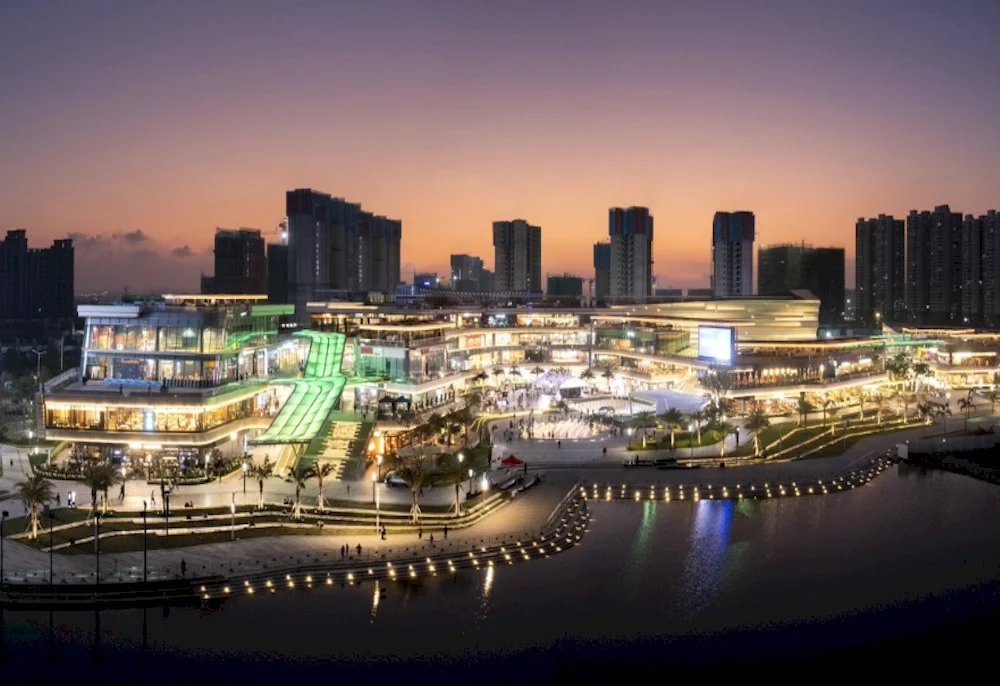
New Delhi, February 18, 2026: On a typical weekend, the modern mall no longer announces itself through sale signage. Caféshum with conversation, curated music drifts through open corridors, and a workshop or live performance quietly draws a crowd. Visitors linger often without a shopping list, turning what was once a swift retail errand into unhurried time well spent. This shift reflects a broader recalibration underway across India’s retail landscape: malls are evolving from transactional centres into experiential destinations designed for engagement, not urgency.
Industry studies indicate that average dwell time has risen meaningfully in assets that have invested in experience-led upgrades, while food, beverage and entertainment now account for a steadily increasing share of mall leasing. According to Cushman and Wakefield, in Q3 2025, activity in malls had increased by 31 per cent. The F& B segment led space take-up in Q3-25 with 40 per cent share, followed by Wellness and Entertainment segments with 12 per cent share each. The F&B segment registered 1.7x growth in Q3-25 compared to a similar period last year
Consumers are increasingly seeking unique dining experiences, and in response, mall operators are allocating more space to F&B segments. This aligns well with a broader shift towards destinations that encourage community interaction and socializing. Moreover, this evolution marks a decisive departure from the traditional anchor-led mall, once defined by large-format stores and inward-looking layouts. Across India’s key urban markets, rigid, boxy formats are giving way to open, mixed-use environments that privilege movement, light and social interaction. The role of the anchor itself is being reimagined, as brand discovery, curated dining and leisure experiences increasingly drive repeat visits and sustained footfall.
Rather than revolving around a handful of large tenants, today’s successful malls function as layered ecosystems, balancing retail with entertainment, wellness and community spaces. In this new paradigm, malls are no longer merely commercial assets but urban social infrastructure: places where commerce intersects with culture, leisure, and everyday life.
At the centre of this transformation is a fundamental rethinking of hospitality; not as an add-on amenity, but as a strategic asset shaping how malls are conceived and operated. Developers are increasingly borrowing from the hospitality playbook, applying guest journey mapping that considers every touchpoint, from arrival and circulation to pause points and departure. Service design now extends beyond security and maintenance to include concierge-style assistance, intuitive wayfinding, and heightened sensitivity to mood, lighting, scent, and acoustics.
This marks a clear break from the earlier assumption that a food court and multiplex alone could deliver experience. Instead, hospitality thinking is being embedded as an operational philosophy, one that prioritises comfort, consistency and emotional engagement.
Besides, this hospitality-led strategy finds its most visible expression in experience zoning, where tenant placement is guided by storytelling rather than convenience. Social FB clusters, wellness and fitness floors, and family entertainment precincts are deliberately choreographed to create distinct moments of engagement, encouraging visitors to move fluidly across the space and extend their time within. Malls offering such mixed-experience environments consistently report higher dwell times than single-purpose retail formats, with wellness and leisure emerging as fast-growing leasing categories.
Further, design plays a critical role in amplifying this effect. Through thoughtful use of spatial flow, local context, materials and curated art, malls are crafting an emotional arc that moves visitors from arrival to discovery, pause and participation. When design functions as narrative, retail assets transcend their commercial role, evolving into landmarks that command recall, loyalty and repeat visitation, rather than remaining anonymous points on a city map.
Additionally, culture is emerging as the most compelling anchor of all. Live performances, seasonal festivals, art exhibitions and rotating pop-ups are increasingly replacing the static pull of traditional large-format tenants, offering reasons to return that go beyond routine consumption. By curating programming that reflects regional identity, local creators and seasonal rhythms, malls are strengthening their role as community connectors rather than anonymous commercial spaces.
Therefore, across India, this hospitality-led, experience-first model is reshaping the future of retail in distinct yet interconnected ways. In Tier I cities, it is driving the reinvention of mature retail assets, where differentiation now lies in programming, service depth and spatial experience rather than scale alone. In Tier II and III markets, malls are assuming an even more central role, emerging as primary social and lifestyle hubs in cities with limited public gathering spaces. As consumer expectations evolve across geographies, the malls that will consistently outperform are those that function as destinations: designed to host, engage and belong.
The author is CEO, Bhumika Enterprises