Plotted Developments Gain Ground as Indian Buyers Prioritize Flexibility and Land Ownership
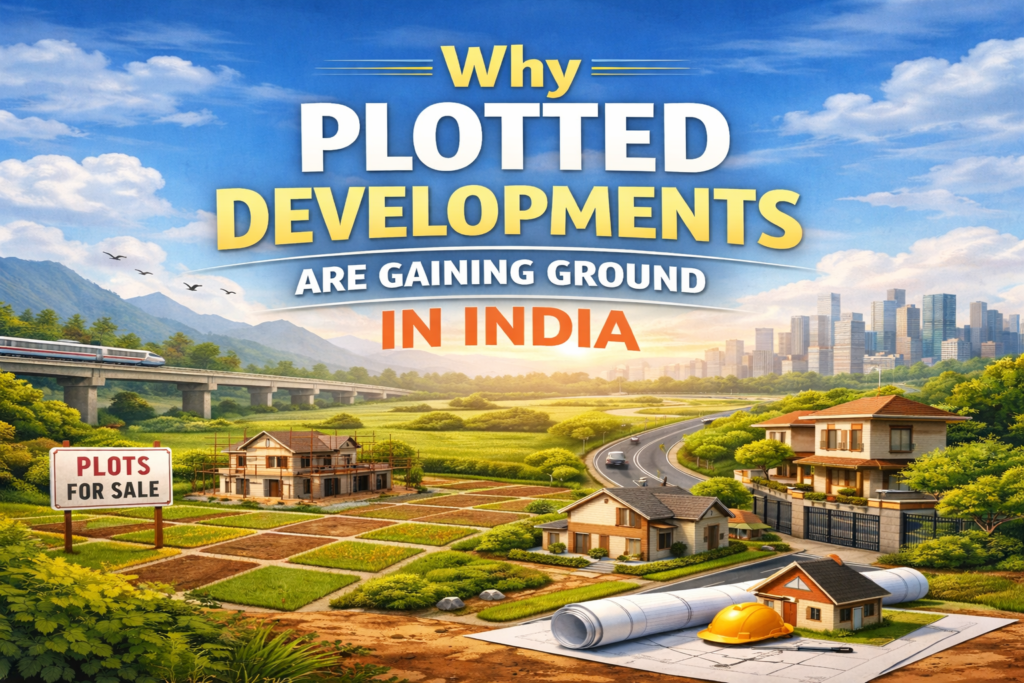
New Delhi, April 28, 2026: In a notable departure from the traditional dominance of high-rise apartments, plotted developments are rapidly gaining traction across India, particularly in Tier 2 and Tier 3 cities. Industry experts suggest that what initially appeared to be an affordability-driven trend has evolved into a fundamental behavioral shift, where the flexibility of land ownership is beginning to outweigh the convenience of ready-to-move housing.
Market data underscores this transition, with JLL India reporting a measurable increase in the share of land-led and low-density formats within overall residential transactions over the past two years. Similarly, research from Anarock indicates that a significant portion of new land acquisitions by major developers is now being earmarked for plotted or villa-led formats rather than vertical housing. This trend is characterized by buyers purchasing plots with no immediate intent to build—a practice once labeled as speculative but now increasingly viewed as a form of structured financial planning.

The appeal of this “hybrid” asset class lies in its ability to offer the perks of modern living without the constraints of a pre-built structure. Preksha Singh, CEO of Agrasheel Infra, notes: “In an era of skyrocketing land prices and shrinking family units, the traditional independent bungalow has faced a crisis of utility, becoming more of a ‘white elephant’ than a functional asset. While the pivot to high-rises addressed the demand for security and community living, the market is now seeing a significant shift toward integrated gated townships. This ‘hybrid’ asset class effectively democratizes the luxury of an independent home. It bridges the gap between the collective benefits of managed infrastructure and the individual’s desire for land ownership and creative freedom, marking a new chapter in urban development.”
While apartments still maintain an edge in terms of rental yields and liquidity in certain core urban pockets, the demand for lower density and open surroundings is becoming a primary filter for modern buyers. Industry leaders believe that increased transparency and developer participation have helped bring land investments into the mainstream.

Umang Jindal, CEO of Homeland Group, explains: “Plotted developments are no longer being evaluated as fringe or speculative investments. With improved regulatory oversight and better developer participation, these assets are entering the mainstream portfolio of end-users and investors alike. What stands out is the gradual nature of this transition, demand is building steadily rather than in spikes, suggesting a more durable shift rather than a cyclical trend.”
Infrastructure expansion, including new expressways and regional connectivity corridors, has also redefined the geographic feasibility of land ownership. By opening up peripheral business districts, these projects have made plotted developments more accessible and naturally aligned with price discovery.

Udit Jain, Director of ONE Group, observes: “From a project perspective, plotted formats allow us to respond more precisely to evolving buyer expectations. There is a noticeable tilt toward low-density living, but equally toward phased financial commitment. Buyers want to enter early, hold, and build when it suits them. This is very different from the earlier cycle where completion timelines dictated purchase decisions.”
Despite the growing enthusiasm, the sector still faces a unique set of challenges as it matures. Developers are now applying the same level of rigorous planning and compliance to plots as they do to high-rises to ensure title clarity and infrastructure readiness.

Shamsheer Singh, Director of AIPL Group, notes the current tension in the market, stating: “Developers are increasingly approaching plotted developments with the same level of planning and compliance as vertical housing. This is helping address long-standing concerns around title clarity and infrastructure readiness. However, the buyer mindset is still in transition, while the intent is long-term, the expectations around appreciation and usability are often immediate, which creates an interesting tension in how these assets are perceived.”
As the real estate market moves forward, it appears to be accommodating two distinct impulses: the efficiency of the vertical urban core and the customizable, incremental growth of the periphery. While high-rise launches remain steady, the quiet expansion of the plotted development footprint suggests that for many Indian families, the dream of owning a piece of land remains as potent as ever.