Built on a 60-Year Legacy of understanding work, Featherlite is now reshaping the future of office real estate
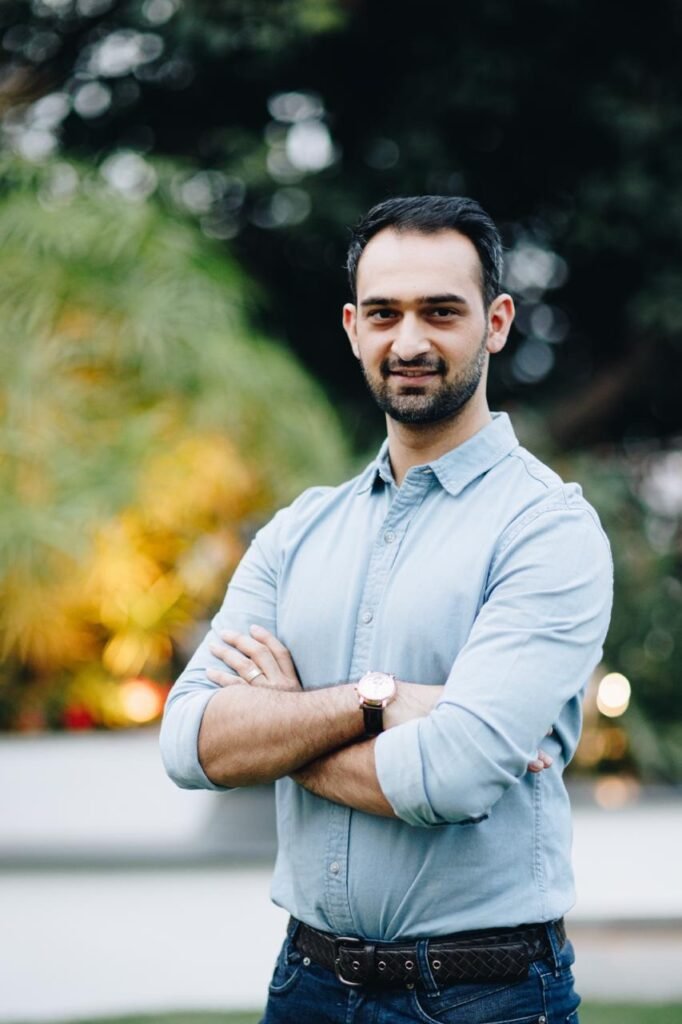
Bengaluru remains India’s primary office destination, accounting for nearly 29% of the nation’s leasing activity in 2025. At the heart of this growth is the Outer Ring Road (ORR) corridor, a magnet for Global Capability Centres and enterprise occupiers. Joining us today is Aditya Chellaram, Executive Director at Featherlite Developers, to discuss their latest landmark, Featherlite Signature.
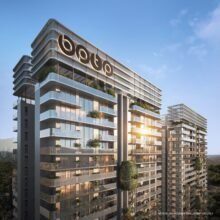
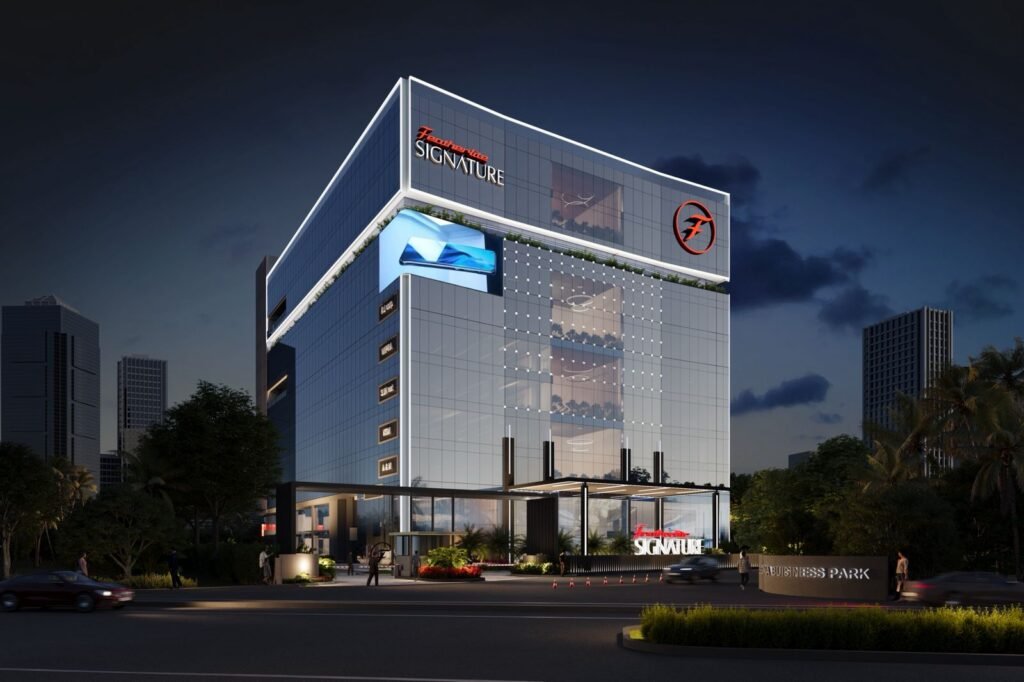
Set along the Outer Ring Road in Bengaluru, Featherlite Signature reflects a very specific moment in the evolution of the city’s office market. Positioned at the edge of established clusters such as Cessna Business Park, the development sits within a corridor that continues to see sustained demand from global capability centres and enterprise occupiers. According to JLL, India’s office market recorded 83.3 million sq ft of gross leasing in 2025, with Bengaluru alone accounting for nearly 29% of total activity, reinforcing its position as the country’s primary office destination. In this context, the project has been planned not around scale, but around how efficiently space can be used and experienced over time. Spread across roughly 2 acres with large, contiguous floor plates of up to 38,000 – 40,000 sq ft, the building allows companies to operate without fragmentation, an increasingly important factor for teams that are scaling quickly and require continuity within a single environment.
The design, developed in collaboration with RSP Architects, focuses on creating a workspace that feels open, functional, and adaptable through the day. A wide frontage, extensive glazing, and double-height volumes bring in natural light across floors, reducing dependence on artificial lighting while improving the overall quality of the work environment. At a structural level, the building integrates a central core, efficient column grids, and high floor-to-floor heights, allowing flexibility in layout planning for different occupier needs. Systems have been designed with long-term performance in mind, from smart elevator management to building automation and energy-efficient operations aligned with green building standards. This becomes relevant as occupiers today are not just evaluating location, but also how well a building supports sustainability, uptime, and day-to-day usability.
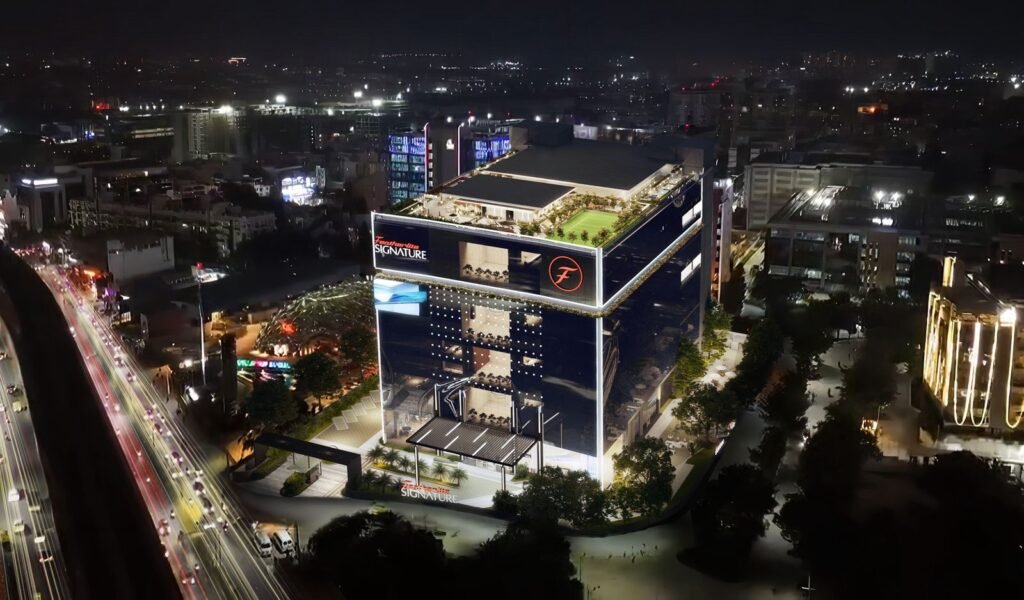
From a user perspective, the project addresses one of the most consistent friction points in the ORR corridor. While large campuses offer scale, they often come with internal congestion and longer commute times within the development itself. Featherlite Signature, with its direct ORR frontage, allows for smoother access and exit, which has a direct impact on employee experience across the day. This is particularly important in a market where, as JLL highlights, global capability centres alone accounted for nearly 37.7% of total leasing activity in 2025, indicating the scale at which large occupiers are entering and expanding within the city. For such occupiers, ease of access, operational efficiency, and employee convenience are no longer secondary considerations.
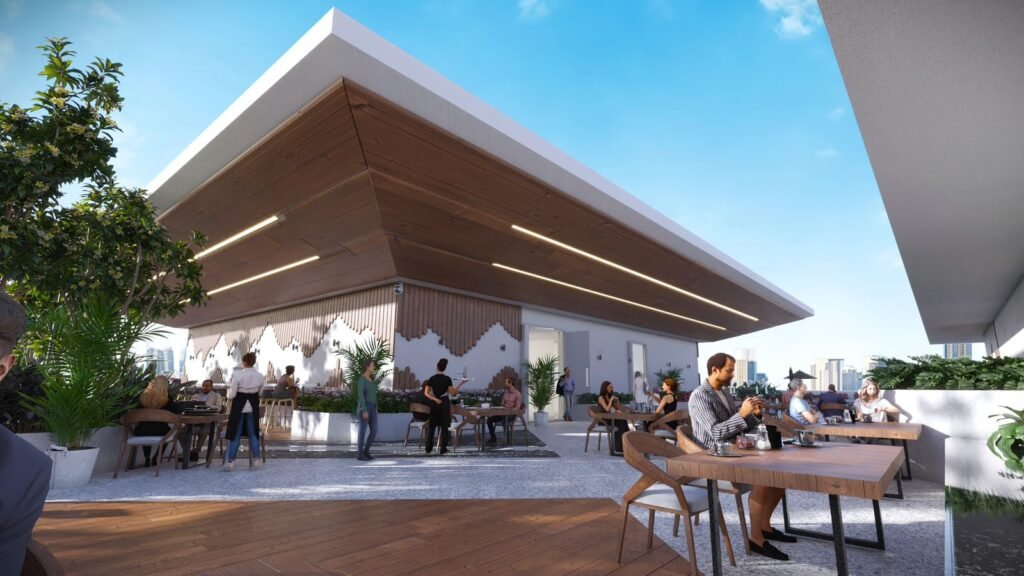
Beyond the workspace itself, the building integrates elements that respond to how offices are used today. Breakout zones, landscaped areas, food courts, and informal interaction spaces are built into the design, allowing employees to move between focused work and downtime without leaving the environment. In a market where demand is increasingly shifting towards high-quality, future-ready assets, as highlighted by continued GCC expansion across India , projects like Featherlite Signature represent a more grounded approach to development. The focus is less on visual scale and more on how the building performs over time, for developers, occupiers, and the people who use it every day.
Today, we explore how Featherlite Developers are redefining the future of work by blending structural flexibility with the ease of access essential for Bengaluru’s globally mobile workforce.
………………………………………………………………………………………………………….
Palash: Aditya, are you primarily focused on the Southern market only?
Aditya: Yeah, we are. We are India’s largest office furniture manufacturing company. We do about half a million square feet of furniture every month. We do about 60,000 chairs and about 40,000 workstations every month. So that’s our core forte!
Palash: So you are into office furniture primarily?
Aditya: Yes, that’s been our primary business since 1965. My great grandfather started the business. Now we are the fourth generation in the business, and my cousin and his father have diversified into real estate in 2006. Since 2006 we’ve been doing real estate, and we have built about 2 million square feet till date. Now, we are continuing to grow. We are building about a million square feet in the next two years. So we have 5,00,000 square feet under construction and are launching 5,00,000 square feet next year.I have another million square feet of properties which we are going to construct in the coming years as well. So this is our portfolio.
Palash: This is a huge transition from office furniture to real estate.What prompted you for this transition?
Aditya: We actually did so as we’ve understood the commercial office space interior market, because we’ve been doing this for customers for the last many years. We’ve been doing interiors for all the fortune 500 companies across India. I’d say at least 50% of them are our customers already, from Amazon, Google, Deloitte, you name it, everybody’s already our customer. Now, from a real estate point of view, when we started investing all of our profits in land, wherever we bought lands, we slowly started converting them into commercial real estate assets, because the customers were largely the same, and the methodology of work we understood very well. So that’s the back story, and based on the relationship that we had with customers, we’ve grown step by step. We built 2 million square feet debt free, which not a lot of companies can say that they have 2 million square feet.
Palash: So now when you say, you transitioned to commercial real estate, it’s primarily office spaces, not retail or warehousing?
Aditya: Primarily office. 80% office I would say. We built about 2 million square feet total and about half a million square feet of residential and about half a million square feet of industrial space also, those are for our own use, for our own factory.
Palash: So now I think you have so much since you have a good amount of experience in office spaces, you think that a flavor of retail is very much helpful these days for the office spaces to be successfully done?
Aditya: Absolutely, absolutely! So if you look at it today, customers are looking for experiences, they are looking for experience-driven commercial real estate. So they’re not looking just for an office with a desk and a workstation. They’re looking for that entire FnB experience. They want to be able to seamlessly integrate into their office using Face Recognition. They want to be able to get up to their floors without any hassels. They also want to be able to go down for a walk, to be honest. In our Chennai property, we just completed 600,000 square feet in Chennai, and customers come there, and they go for a walk around the building at five o’clock from their office. It’s a very beautiful campus we’ve set up there and there’s a Miyawaki forest. We have a small garden for people to grow their own fruits and vegetables. So it’s become a very nice community there. People are more, working in a place that they enjoy being, so it’s really becoming their second home. I think that’s our concept of building offices that people feel like they are like ourselves. We also have a 15,000 square feet food court on the ground floor with over eight different vendors. We have a nice cafe. We have a gym on the terrace. We have a multipurpose court on the ground floor. We have a Cricket League and we call it The Address Cricket League. We have various amenities that you know customers can enjoy, from a wellness room to a lot of amenities in the park side.
Palash: So which all are the cities where you are present in?
Aditya: Largely present in Bangalore and Chennai. We do have a presence in Coimbatore.
Palash: You plan to remain in the southern part only, or you plan to venture out west or north.
Aditya: Largely, we’re going to stay in the south of India. We may enter Hyderabad and Pune. Those are two cities we are looking at. But right now it’s Bangalore, it’s Chennai, and potentially Coimbatore. These are three markets we’re looking to be in India.
Palash: And in all the markets you are present right now, and Hyderabad and Pune, where you intend to go, which market is the most lucrative and is seeing maximum traction in terms of office spaces?
Aditya: So I think in terms of micro markets, Bangalore is a phenomenal micro market, obviously, but we are looking at newer micro markets. Chennai and Bangalore have been our state. But if you look at the newer micro markets, we are looking at Coimbatore because of the land prices being relatively lower, so entry possibility is much higher. So those are some of the markets. And if you look at yield quotations into 12% expectation. So even our new project in Chennai, which is a 200,000 square feet industrial building that is also going to be around 11-12, and 10, three years. So, yeah,
Palash: Which segment is leading GCC and which other segments, if you can mention them?
Aditya: Absolutely. So I think it depends on the city. Really city dependent. Now, for example, at Chennai, if you look at it, it’s primarily manufacturing companies, technology back end. So that’s how the micro market is driven for that use case, and that’s what drives Chennai, because there’s a lot of industrial manufacturing capability. But if you look at a city like Bangalore, more than 50% of the demand is from GCCs. And obviously today Flex is another big component of it. So Flex is a large player in the market who’s taking up to nearly 25 to 30% of space across Bangalore. So we are obviously working with several flex players, both from a furniture perspective and a real estate perspective.
Palash: And do you plan to venture out into residential?
Aditya: We’re actually on the drawing board for two residential projects now. One is about a million square feet, and the other is about 200,000 square feet. It will be a premium segment home. So residential is very much on the card.
Palash: In Bangalore, you have got a good number of residential players. How do you differentiate yourself with your competitors as they are established as well?
Aditya: We’ve done seven or eight joint developments with Prestige, and we have been very successful in those. I think now we’ve kind of learned from the best, and we have obviously, one of the market leaders across India, I would say. So we’ve kind of learned from the best, and now we’re looking to take those skill sets that we’ve done and implement in our own projects, however, with a different flavor, different spin, because we do have a unique proposition of understanding, really how people work. So I think that work and life balance is really what we’re trying to build in our next project, which is going to be a mixed use development, both commercial and residential together. So that’s the plan!
Palash: So what was your revenue in the last financial year, and how have you been growing over the years? In the past couple of years, or maybe past three years?
Aditya: We’ve been growing at about 30% a year, and this year we’ll be touching about Rs 100 crore in our real estate business, and we should hit about Rs 150 crore in the next financial year.
Palash: That’s a huge 50% journey.
Aditya: We are delivering a large project. So the revenue of this project is five crore a month. So that’s why I’m quite confident of reaching that target.
Palash: On the commercial front, do you have your own leasing team, or it’s the IPCs and DPCs who do all the different work for you?
Aditya: That’s a good question. We do have our own leasing team. We have about four, five people in Bangalore, Chennai, doing the leasing. But we also do work with IPCs very closely, as they have a lot of their corporate mandates and everything.
Palash: Now that you are venturing into new cities like Pune and Hyderabad and so, when you compare these markets with Bangalore, how different are these markets, in terms of pricing, in terms of demand, in terms of gradation of office spaces which the occupiers are demanding in these cities?
Aditya: We’ve not gotten into those cities yet, so I can’t really comment on that, but we are looking for lands in those cities. So we haven’t really studied the end-use of the micro market, but we’re still in the nascent stage of that. Yeah, we are largely a South Indian player in Bangalore and Chennai. These are the two cities we’re in, and we continue to be in, actually. We’re doing two projects in Goa right now, residential,these will all be ancillary cities for us. Our focus is going to be Bangalore and Chennai.
Palash: Lastly, what will be your growth strategy in the future and how do you see your portfolio evolving in the coming years?
Aditya: So largely, we’re looking to continue to focus on our commercial real estate. We have 1.5 million space already on the drawing board for our commercial vertical plus. The strategy is to actually balance our commercial real estate with building up a residential project that gives cash flows to grow. So it’s a balance of residential and commercial, and with a few industrial projects here and there.