Aequs SEZ Emerges as India’s Cleanest Manufacturing Ecosystem with Near 100% Renewable Energy Adoption
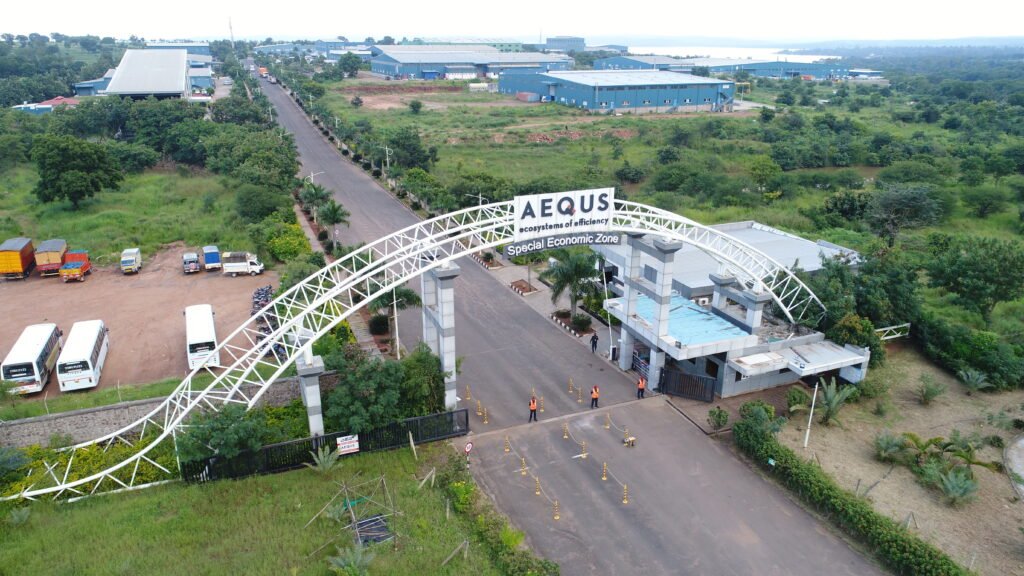
New Delhi, June 6, 2026: In a significant leap for sustainable industrial manufacturing, India’s first notified precision engineering and aerospace cluster, the Aequs SEZ, has transformed into one of the country’s most advanced green manufacturing ecosystems. The special economic zone has achieved a milestone by utilizing close to 100% renewable energy across its operations, establishing a new national benchmark for eco-friendly industrial infrastructure, Aequs SEZ said in a press release.
Also widely known as the Belagavi Aerospace Cluster (BAC), the SEZ spans a campus of over 250 acres. It successfully fulfills the intense power requirements of its operational units through an integrated energy framework. This system combines on-site rooftop solar installations, open-access renewable energy procured from third-party green vendors, and dedicated green power supplied directly by the State Electricity Board. Through this diverse matrix, BAC has become one of the rare large-scale industrial manufacturing clusters in India to successfully execute a near-complete transition to green energy at scale.

Shyam Kalyanasundaram, CEO of Aequs Infra, emphasized the company’s core operational philosophy during an event celebrating the milestone with employees and customers on World Environment Day today. “At Aequs Infra, sustainability is embedded into the way we design and operate industrial ecosystems,” Kalyanasundaram said. “The Aequs SEZ at Belagavi demonstrates how large-scale manufacturing can successfully integrate renewable energy while delivering reliability, operational efficiency, and cost competitiveness to customers. As one of the few industrial clusters in the country to have achieved renewable energy adoption at this scale, we believe this model can serve as a blueprint for future-ready industrial infrastructure in India.” He further noted that such milestones serve as a critical reminder that sustainability must move beyond mere corporate intent and translate into measurable, real-world action.
The campus functions via its own licensed internal power distribution network, which ensures highly efficient and reliable energy delivery to more than 35 active industrial customers. These units include prominent multinational and domestic Indian firms that manufacture components for some of the largest corporations in the global aerospace supply chain. Beyond sharply lowering the carbon footprint of these high-precision operations, the vertically integrated infrastructure delivers remarkable operational efficiencies and translates into a compelling cost advantage of over 30% for the businesses operating within the cluster.
The BAC model achieves further environmental benefits through its hyper-localized ecosystem strategy. By bringing the entire manufacturing value chain—stretching from raw material processing to the completely finished product—into a single physical location, the cluster dramatically curbs logistical emissions. In traditional aerospace supply chains, parts typically travel up to 5,000 kilometers between specialized facilities during production. At the Belagavi cluster, that physical distance is compressed to just under 500 meters, slashing the carbon footprint per part and rendering the BAC unique among aerospace facilities worldwide.
Looking ahead, parent company Aequs Infra has already begun replicating this sustainable, vertical-cluster approach in its other major regional developments. The firm is currently implementing similar green infrastructure models at its specialized industrial hubs in Hubballi and Koppal, where it operates India’s first Consumer Durable Goods Cluster and dedicated Toy Cluster, respectively.