GreenCo Summit 2026 Launches Major Environmental Alliances to Accelerate Net Zero Goals
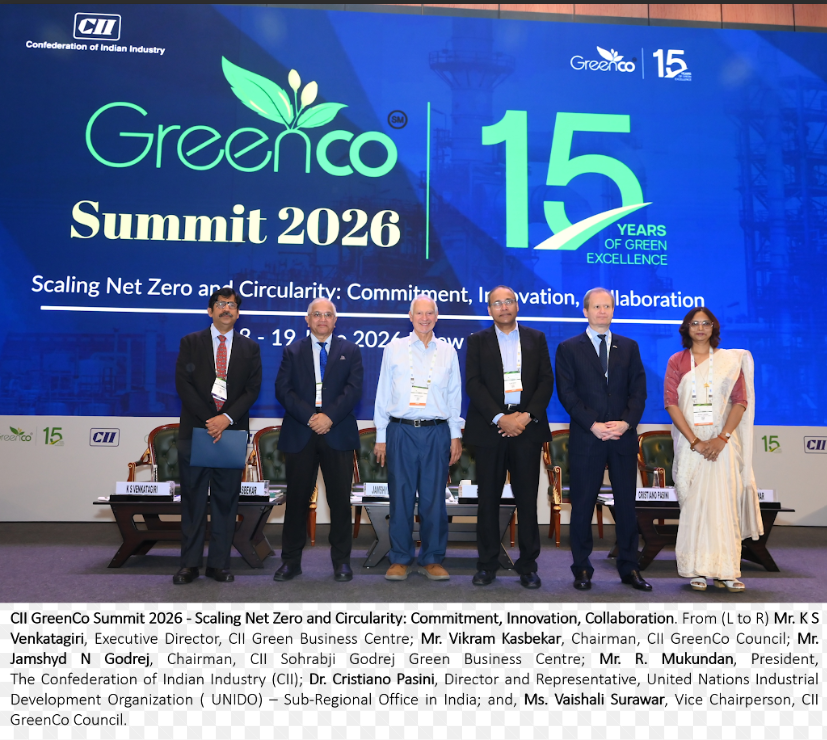
New Delhi, June 18, 2026: The GreenCo Summit 2026, organized by the CII GreenCo Council, commenced today at the Bharat Mandapam, New Delhi, bringing together policymakers, industry leaders, sustainability experts, technology providers, financial institutions and environmental professionals to accelerate India’s transition towards a net-zero and circular economy, CII GreenCo Council said in a press release.
Held under the theme “Scaling Net Zero and Circularity: Commitment, Innovation, Collaboration,” the Summit served as a national platform for advancing dialogue and action on industrial sustainability, resource efficiency, circular economy, clean energy, green technologies and climate resilience. The gathering highlighted how the domestic GreenCo movement continues to gain momentum across India, with more than 1,600+ companies across over 27 sectors actively engaging with GreenCo frameworks and sustainability initiatives.

Speaking on the occasion, R. Mukundan, President, The Confederation of Indian Industry (CII), highlighted the increasing importance of sustainability as a strategic business imperative and underscored the role of industry-led initiatives in driving long-term economic and environmental value creation. “The future belongs to companies that place sustainability at the core of their business. In a world increasingly defined by challenges around energy, food and water security, organizations must move beyond compliance and embed sustainability across their operations and value chains. Green companies are not just contributing to environmental progress, they are building the foundation for long-term resilience, competitiveness and economic growth,” Mr. Mukundan stated.

Jamshyd N Godrej, Chairman, CII Sohrabji Godrej Green Business Centre, said, “Decarbonization is no longer an environmental choice; it is an economic necessity. As India advances its green transition, businesses must move beyond individual initiatives and drive sustainability across their operations and supply chains. Through green energy, resource efficiency, sustainable products and innovation, industry has a unique opportunity to build a more resilient, competitive and future-ready economy.”
A major highlight of the Summit was the launch of three strategic industry initiatives aimed at accelerating circularity, sustainable supply chains and industrial decarbonization. The first initiative, the CII Material Circularity Guidelines and Certification, introduced a structured framework to help industries assess, measure and improve material circularity at the manufacturing facility level. The certification framework is designed to enable organizations to enhance resource productivity, reduce dependence on virgin materials, improve supply chain resilience, lower material-related environmental impacts, and advance circular economy practices through a systematic and measurable approach.
The second initiative, the CII Green Supply Chain Coalition for the Automotive Sector, brought together automotive manufacturers and suppliers on a common platform to strengthen sustainability across value chains. The coalition seeks to establish a standardized sustainability assessment framework, improve transparency and data quality, facilitate data-driven decision-making, and support the management of Scope 3 emissions, while enabling suppliers to build sustainability capabilities and enhance competitiveness.
The third initiative, the CII Heat Pump Alliance, was launched as a strategic collaborative platform to accelerate the adoption of energy-efficient heat pump technologies and support industrial decarbonization. The Alliance aims to promote heat pumps as a key pathway for thermal electrification, support the deployment of next-generation high-temperature heat pumps, strengthen domestic manufacturing and innovation ecosystems, and facilitate policy and financing mechanisms that enable industries to transition towards low-carbon thermal energy solutions.
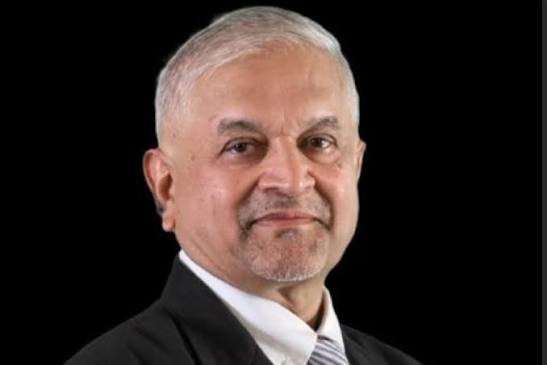
Delivering the theme address, Vikram Kasbekar, Chairman, CII GreenCo Council, emphasized the need for industries to move beyond commitments and accelerate implementation through measurable actions, collaborative platforms and scalable sustainability frameworks. “Sustainability is no longer just an environmental imperative; it is a strategic business opportunity that enhances competitiveness, resilience and long-term value creation. As global markets increasingly factor carbon performance into business decisions, Indian industry must accelerate its transition through innovation, circularity, green supply chains and collaboration. Together, we can transform sustainability from a business responsibility into a powerful driver of growth and competitiveness,” Mr. Kasbekar said.
The Summit featured comprehensive discussions on some of the most pressing sustainability challenges and opportunities facing industry today, including net-zero pathways, circular economy strategies, clean energy transitions, sustainable supply chains, industrial decarbonization, emerging technologies, water stewardship and nature-based solutions. Through its rating systems, capacity-building programmes and industry platforms, GreenCo has already enabled participating companies to achieve significant improvements in energy efficiency, water conservation, renewable energy adoption, material conservation and greenhouse gas reduction.
Dr. Cristiano Pasini, Director and Representative, United Nations Industrial Development Organization (UNIDO) Sub-Regional Office in India said, “India is demonstrating that sustainability and competitiveness can advance together. As global markets increasingly demand greener products and supply chains, the country’s MSME sector has an unprecedented opportunity to lead the transition towards sustainable manufacturing. The focus must now shift from pilot projects to large-scale adoption of clean technologies, innovative financing mechanisms and green supply chain practices. The experiences and solutions emerging from India are not only strengthening domestic industry but also offering valuable lessons for developing economies across the world.”