News
India’s Building Materials Market Presents $100-B Opportunity by 2030: Avendus Capital
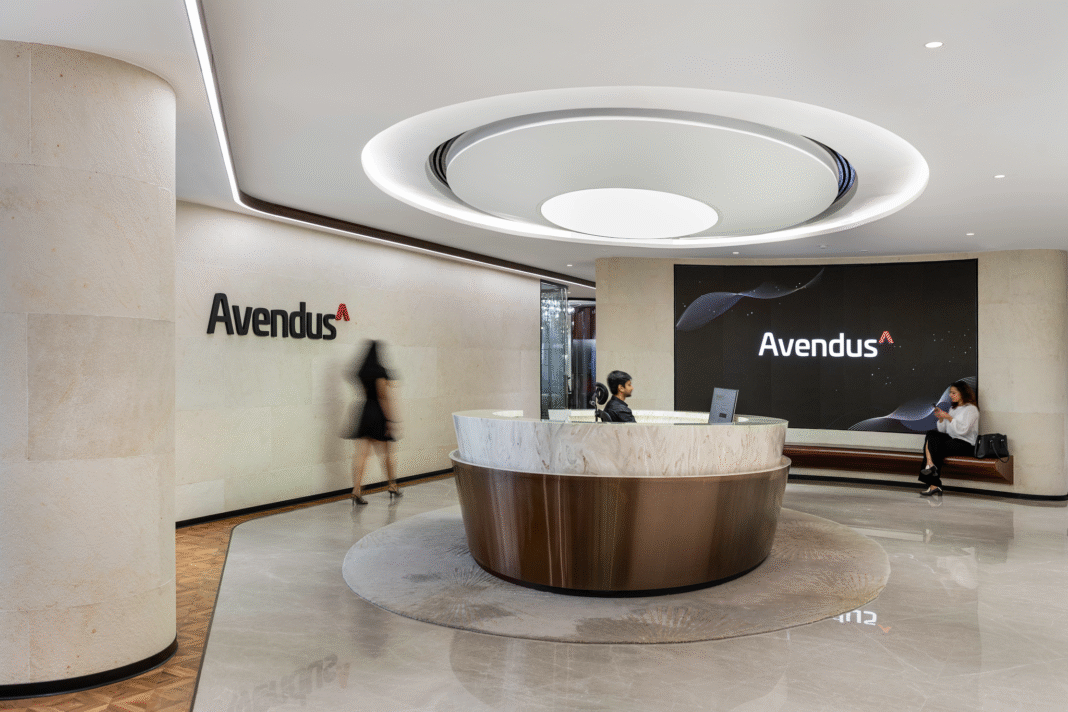
Mumbai, February 25, 2026: Investment bank Avendus Capital has released its latest report on the Indian building materials sector, analysing growth across six high-value segments, including fast-moving electrical goods (FMEG), paints and coatings, tiles and bathware, wood panels, plastic pipes, fittings and tanks, and furniture fittings and architectural hardware. The report projects India’s building materials market to reach approximately $100 billion by 2030, driven by a robust 10–12 per cent CAGR over the next five years, up from $57 billion in FY25.
According to the report, FMEG represent the largest and most dynamic opportunity, with wires and cables expected to grow at a mid-teens CAGR, supported by grid upgrades, data centres, EV infrastructure, and electronics manufacturing. Plastic pipes, fittings and tanks is seeing accelerated consolidation, with organized share reaching ~70 per cent, while paints and coatings, among the most organized and profitable segments (14–19 per cent EBITDA margins), is witnessing the entry of large industrial players, accelerating innovation and premiumization.
Tiles and bathware continues to benefit from India’s emergence as a global export hub, with a ~15 per cent share of global tile exports by volume, underpinned by product sophistication, while wood panels is witnessing rising MDF penetration (from 20 per cent in FY20 to 30 per cent in FY25, with projections of ~45 per cent by FY30), driven by modularization and shorter replacement cycles. Furniture fittings and architectural hardware is also undergoing a structural shift toward localized manufacturing, aided by backward integration and tighter regulatory norms.

Koushik Bhattacharyya, Managing Director and Head, Industrials Investment Banking, Avendus Capital said, “Building materials sit at the intersection of India’s key growth engines—real estate and consumption. As consumers increasingly view homes as long-term lifestyle assets rather than functional setups, we are witnessing increased spending on branded, higher-quality products. Despite these trends, consumption of building materials in India remains structurally low compared to global benchmarks, leaving meaningful headroom for long-term expansion. For a sector that remains materially underpenetrated – with per-capita consumption less than one-third of global averages – we find the opportunity for investment and consolidation compelling.”
The report reveals that building materials are increasingly serving as a direct proxy to ride tailwinds in India’s real estate, infrastructure, consumption and B2B manufacturing. To track this transformation, the report includes the Avendus Building Materials Index (ABMI), a market-cap-weighted basket of leading listed companies. Over the past decade, ABMI has delivered a 28 per cent CAGR, outperforming major Indian benchmark indices.





Godrej Industries Group Partners with PWD, Delhi Government for Restoration and Beautification of Netaji Subhash Place Flyover
New Delhi, April 7, 2026: In a significant move toward urban renewal, the Godrej Industries Group (GIG) has officially partnered...


Experion SAATORI Hits ₹1,800 Crore Sales Milestone Amid Luxury Housing Boom
Noida, April 7, 2026: Experion Developers has announced a record-breaking launch for its latest residential project, Experion SAATORI. Located in...


UP RERA to crackdown on QPR defaulters: Portal Window Opens April 1 for Mandatory Project Updates
Lucknow/Gautam Buddh Nagar, April 7, 2026: The Uttar Pradesh Real Estate Regulatory Authority (UP RERA) has announced that the portal...


CREDAI NCR Hosts Spirited Cricket Match for Next-Gen Real Estate Leaders
New Delhi, April 7, 2026: The Jamia Hamdard Cricket Ground became a hub of competitive camaraderie as CREDAI NCR, the...


Nimbus Projects Expands Capital Market Footprint with NSE Listing
Mumbai, April 7, 2026: Nimbus Projects Limited has expanded its capital market presence by listing on the National Stock Exchange...
Spectrum@Metro Hosts High-Energy ‘Fever Premier League’ Activation with RJ Kamby, Delighting Visitors
Noida, April 7, 2026: The retail landscape of Sector 75 hummed with excitement on April 5, 2026, as Spectrum@Metro played...
-

 News3 weeks ago
FractoProp Receives SEBI Registration for Ridhama Real Estate Fund
-
 News4 weeks ago
Enviro Infra Engineers Secures ₹411 Crore Bihar Sewerage Project Under AMRUT 2.0
-
News2 weeks ago
How Noida International Airport Will Impact Property Prices
-
News1 week ago
Noida International Airport Inauguration Sparks New Real Estate Boom For NCR
-
News3 weeks ago
Rise of Airport-Linked Real Estate: Opportunities Emerging Around Jewar
-
News5 days ago
Tata Realty Seals Bengaluru Land Deal at ₹2,300 Crore; CBRE Advisor for Transaction
-
News4 weeks ago
Greenlands Global Private Limited Appointed as Managing Partner for Big FM Realty’s ₹1,200 Crore Mixed-Use Development
-

 News3 weeks ago
India Maintains Competitive Edge as Asia-Pacific Office Fit-Out Hub, Reports Knight Frank