India’s Retail Transformation: The Growing Importance of Redevelopment and Repositioning
By Nandini Taneja, CEO, Bhumika Enterprises
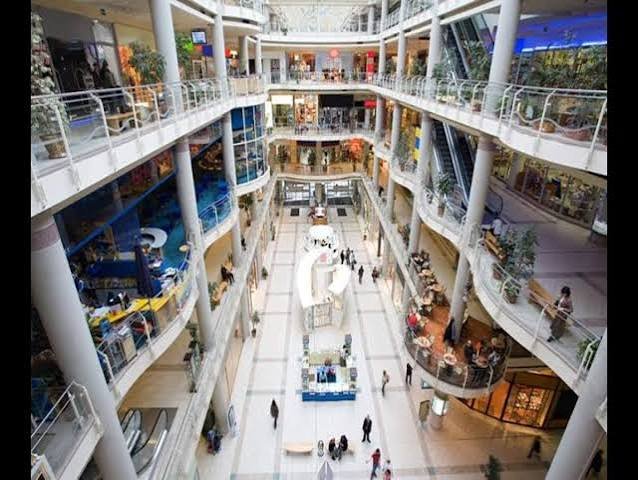
India’s retail story is entering a more mature phase. For years, growth was measured by how much new space could be added; today, the real question is how effectively that space is working. A visible gap has emerged between older malls that are struggling to stay relevant and a new breed of Grade A developments that are drawing consistent traction on the back of curated experiences and stronger tenant mixes. This has made redevelopment less of an option and more of a strategic necessity. During calendar year 2025, India’s retail sector delivered an exceptional 54% year-on-year growth in gross leasing volume. Shopping malls captured 45% of the total leasing activity in 2025, while high streets commanded a dominant 48% share. This surge reflects unwavering retailer confidence across India’s key consumption centres and aggressive expansion strategies by retailers against an uncertain global backdrop.
Redevelopment today is being driven by far more than the need to refresh appearances. A large part of India’s existing mall stock is beginning to show signs of fatigue, struggling to keep pace with evolving consumer expectations and newer, better-curated destinations. At the same time, the retail model itself is shifting from a straightforward exercise in leasing space to a more nuanced approach centred on experience monetisation, where dwell time and engagement directly influence performance.
This is further compounded by the growing pull of high streets and the convenience of digital commerce, both of which are redefining how and where consumers choose to spend. In this environment, simply achieving occupancy is no longer a marker of success; what matters is how productively that space performs. Increasingly, the focus is on driving higher yields per square foot through sharper curation, stronger adjacencies, and more active programming, because today, filling space is no longer enough; activating it is.
At the heart of this shift lies a more deliberate approach to repositioning, where revamp is being used as a calibrated growth strategy rather than a one-time upgrade. One of the most visible changes is in tenant mix—malls that were once dominated by fashion are being rebalanced towards F&B and entertainment, with dining now emerging as a primary anchor that drives both footfall and dwell time. In 2025, fashion & apparel (34%) and food & beverage (20%) together comprised more than half of the annual leasing. Between 2023 and 2025, it is F&B that has gained in share from 16% in 2023 to 20% in 2025, emerging as a clear winner in terms of redefining retail space requirements.
This is being complemented by a rethink in design and spatial planning, where open layouts, natural light, and outdoor interfaces are being prioritised, alongside zoning that caters to distinct lifestyle segments. Increasingly, these assets are also integrating mixed-use elements such as co-working, wellness, and hospitality, blurring the lines between retail and everyday life. In many ways, design is no longer just about how a space looks, but how it influences movement, interaction, and time spent. Layered onto this is a sharper focus on experience through events, pop-ups, and cultural programming that position malls as community hubs rather than transactional spaces. Technology, meanwhile, is quietly reshaping the backbone of these transformations, from smarter parking and navigation to data-led tenant curation and phygital interfaces. It is no longer confined to backend efficiency; it is increasingly becoming a visible, consumer-facing tool that enhances engagement and personalisation.
Moreover, this transition is unfolding beyond the metros, with Tier-II and emerging cities beginning to shape their own retail narratives. In a market like Udaipur, retail evolution is being closely aligned with its tourism economy, where redevelopment is less about scale and more about crafting immersive, culture-led environments that seamlessly blend retail with leisure and hospitality. The emphasis here is on creating destinations that resonate with both visitors and residents, drawing from the city’s inherent character. Faridabad, on the other hand, reflects a different trajectory within NCR, where previously underpenetrated retail is being reorganised into more structured, curated formats. Together, these markets underscore that India’s retail transformation is now increasingly taking root in aspirational consumption centres that are redefining demand on their own terms.
The impact of redevelopment is beginning to be reflected clearly across performance metrics, particularly in how footfall, rentals, and asset values are being redefined. The focus is no longer on sheer visitor volume, but on improving the quality of footfall. This shift is also translating into tangible rental upside, with premium, well-curated Grade A+ assets commanding significantly higher leases, often seeing strong double-digit growth as demand concentrates around quality supply. In effect, redevelopment is narrowing the long-standing disconnect between real estate and retail performance, bringing the two into far closer alignment.
Ultimately, what is underway is far more than a cycle of redevelopment. Malls are steadily evolving into urban social infrastructure, spaces that extend beyond commerce to become part of the city’s everyday rhythm and interaction. In this context, success will not be defined by how much demand is captured, but by how intuitively developers can anticipate shifting behaviours and respond to them in real time. The next phase of retail growth will belong to assets that remain fluid, responsive, and consistently relevant to the consumer they are designed to serve.
Disclaimer: Views expressed in this article are those of the author, and not necessarily of Realty&More.