Maritime Leaders Chart Course for 2047 as IPLC 2026 Concludes in Mumbai
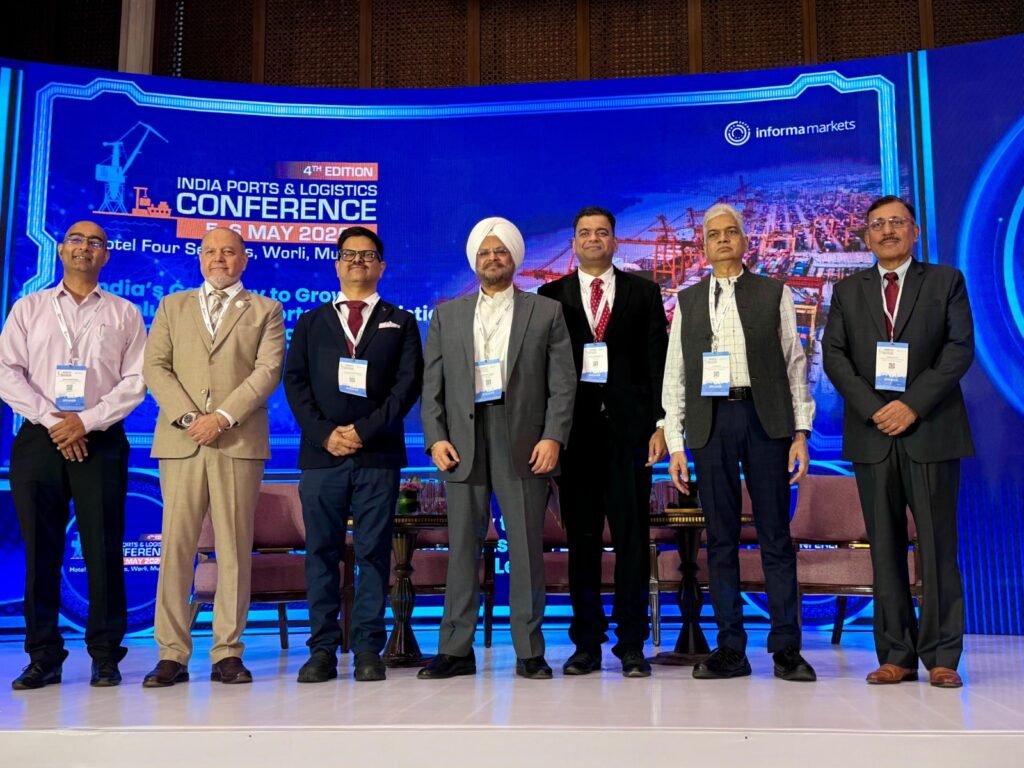
The India Ports & Logistics Conference (IPLC) 2026 concluded its two-day summit at the Hotel Four Seasons in Mumbai on May 6. Bringing together more than 300 delegates—including government authorities, shipping lines, and tech startups—the event served as a high-level forum to align India’s infrastructure goals with the ambitious Maritime Vision 2030 and 2047 frameworks. Throughout the sessions, 47 eminent speakers explored the transformation of India’s trade corridors, focusing on the theme, “India’s Gateway to Growth: Revolutionising Ports and Logistics – Vision to Global Leadership,” a press release from the organizers said.
Central to the discourse was the impact of the Indian Ports Act 2025, a legislative shift designed to modernize the regulatory landscape and attract a projected $82 billion investment pipeline. Industry experts and policymakers discussed how this new framework would foster a more transparent, investment-friendly environment, leveraging sovereign capital and private equity to drive port-led industrialization.

Davinder Sandhu, Co-Founder & Chairman of Primus Partners, highlighted the importance of this shift, stating, “The Indian Ports Act, 2025 marks a fundamental shift from a regime of control to one of facilitation. This transition is critical in unlocking private capital, improving ease of doing business, and accelerating decision-making across the maritime ecosystem. More importantly, it repositions ports not merely as gateways for trade, but as engines of economic growth, anchoring industrial development, logistics efficiency, and global competitiveness. This creates a strong foundation for attracting long-term investments into India’s maritime sector.”
The historical and strategic significance of the maritime sector was underscored by Shri Sushil Khopde, Additional Director General of Shipping, who drew a vivid comparison between trade and biology. “Trade routes are like circulation. If circulation stops, organs fail. A nation’s economic vitality depends on the seamless movement of goods across global corridors,” he remarked. Khopde further connected India’s modern ambitions to its ancient heritage, noting that the country’s maritime supremacy dates back to the Gupta period. He added, “India has always been a maritime nation at its core. Our history reflects strong global trade connections, and today we are once again reclaiming that position with renewed focus and capability.”

The conference also addressed the human element of the industry, particularly the roles of innovation and gender diversity in modernizing logistics. H. K. Joshi, Former Chairperson of the Shipping Corporation of India, noted the progress made under current national leadership while calling for further industry-led disruption. “The maritime sector is witnessing increasing participation of women, reflecting a positive and progressive shift. The transformation led under the leadership of Hon’ble Prime Minister Shri Narendra Modi ji has been remarkable. It is now time to leverage the enabling ecosystem created by the government and drive disruptive innovation across the sector,” she said.
As the official Knowledge Partner for this fourth edition of the IPLC, Primus Partners moderated key sessions and announced plans to release a comprehensive white paper based on the summit’s findings. This document is expected to provide actionable insights for stakeholders as India seeks to cement its status as a top-five maritime nation. Beyond the formal policy discussions, the event functioned as a critical networking hub, facilitating new business collaborations and partnerships intended to accelerate the digital and green transformation of India’s ports.