Impact of Petrol and Diesel Price Increase on the Construction Sector
By CA Rajnish Singh

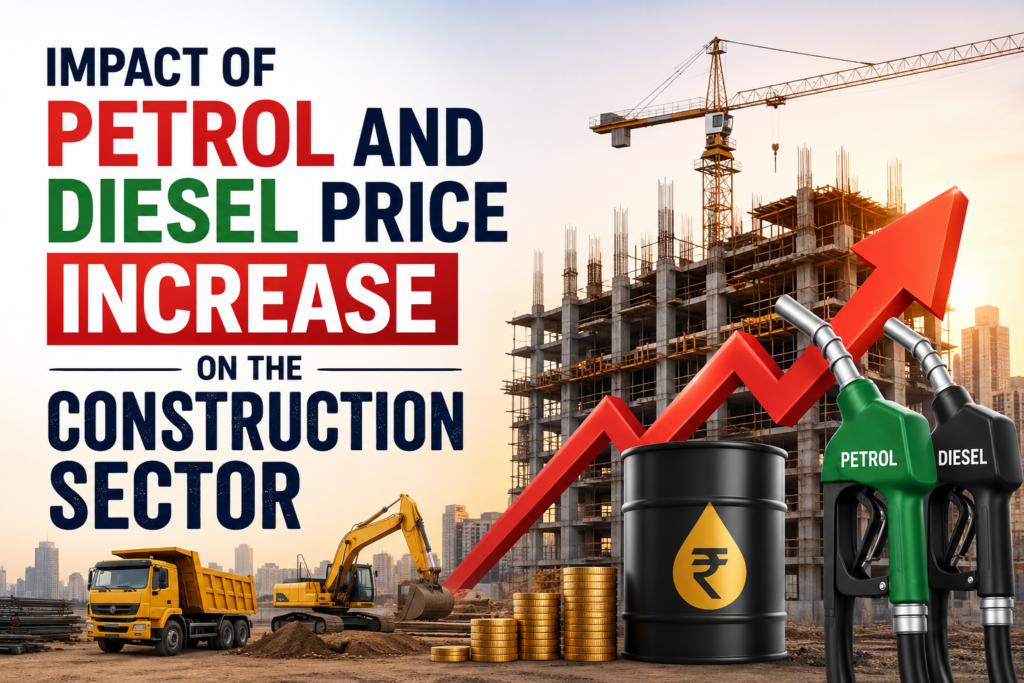
The construction sector is highly sensitive to fuel prices because it depends heavily on diesel-based transport, earth-moving machinery, generators and movement of bulk materials. A rise of even ₹3 per litre in petrol and diesel may look small at the petrol pump, but for construction companies, contractors and infrastructure developers, it can create a much larger cost impact.
Diesel is the main fuel used in construction activities. Excavators, cranes, loaders, road rollers, concrete mixers, batching plants, compressors and diesel generators are commonly used at construction sites. A medium-sized construction site may consume anywhere between 300 to 1,000 litres of diesel per day, depending on the size of the project. If diesel price increases by ₹3 per litre, the daily additional fuel cost can increase by ₹900 to ₹3,000 per day for one site. For a large infrastructure project consuming 5,000 litres of diesel per day, the additional cost may be around ₹15,000 per day, or nearly ₹4.5 lakh per month.
The bigger impact comes through transportation. Construction material is bulky and transport-intensive. Cement, steel, sand, stone aggregates, bricks, tiles, pipes and electrical materials are transported through trucks, most of which run on diesel. For example, if a truck consumes around 80 to 120 litres of diesel for a long-distance trip, a ₹3 per litre increase means an additional cost of ₹240 to ₹360 per trip. When hundreds of truck trips are required for a project, the additional freight burden becomes substantial.
In construction, transportation cost normally forms around 5% to 12% of the material cost, depending on distance and type of material. In items like sand, stone chips and aggregates, freight can be even higher because the material is heavy and low-value. If diesel prices rise, transporters generally increase freight rates by 3% to 7%. This directly increases the landed cost of construction materials at the project site.
Material cost is the largest component of construction. In a typical building project, cement, steel, bricks, aggregates, tiles, electrical and plumbing items may account for nearly 55% to 65% of the total project cost. Labour may account for 20% to 25%, while machinery, fuel, transport and overheads may account for 10% to 15%. Therefore, even a 2% to 3% increase in material and transport cost can increase the total construction cost by around 1% to 2%.
To understand this in simple numbers, assume a housing project has a construction cost of ₹2,500 per square foot. If fuel-related transport and machinery costs increase the overall cost by even 1.5%, the cost goes up by around ₹37 to ₹40 per square foot. For a 1,000 square feet flat, this means an additional construction cost of nearly ₹37,000 to ₹40,000. For a project of 5 lakh square feet, the additional burden can be around ₹1.85 crore to ₹2 crore.
Contractors are among the worst affected. Many contracts are fixed-price contracts. If a contractor has quoted rates before the fuel price increase, but the actual execution happens later, the additional diesel, transport and machinery cost reduces his margin. In many construction contracts, the net profit margin is only around 5% to 8%. If fuel and material escalation increases cost by 2% to 3%, almost half of the contractor’s margin can be wiped out. Small contractors may even suffer losses if there is no price escalation clause.
Infrastructure projects are also affected in a major way. Road construction, highway projects, metro work, bridges and airport projects require large-scale use of bitumen, cement, steel, aggregates and heavy machinery. Diesel is used at every stage — excavation, compaction, transportation, concrete mixing and site power. In road projects, fuel and transport can form a significant part of the operating cost. A sustained increase in diesel prices can increase project cost, delay execution and create pressure for revised budgets.
The real estate sector also feels the pressure. Builders may try to pass on higher construction cost to buyers. If the cost of construction rises by ₹40 to ₹100 per square foot due to fuel, freight and material escalation, the final price of flats may increase. This is especially painful in affordable housing, where buyers are highly price-sensitive. Higher construction cost can also reduce new project launches because developers become cautious about margins and demand.
The impact is not limited to builders and contractors. Higher construction cost also affects the wider economy. Expensive construction means higher cost of houses, offices, factories, warehouses and infrastructure. This can increase rents, project budgets and cost of doing business. Since construction is one of the largest employment-generating sectors in India, any slowdown in projects can also affect labour demand.
In conclusion, a ₹3 per litre increase in petrol and diesel is not just a fuel price issue. For the construction sector, it increases diesel cost, freight cost, material cost, machinery cost and project cost. A small fuel hike can translate into lakhs or crores of additional burden depending on project size. Therefore, construction contracts must include proper price escalation clauses, better fuel monitoring, efficient logistics planning and use of local suppliers wherever possible. In today’s environment, fuel cost management is no longer a minor administrative issue; it is a key factor in project profitability.
Disclaimer: views expressed in this article are those of the author, and not necessarily of Realy&More.